If you’re trying to decide between the Brooks Glycerin GTS 23 and the GTS 22, you’re not alone. On paper, these two shoes look very similar — same name, same category, similar specs — but once you put them on, they actually feel quite different.
In this comparison, I’ll break down the real-world differences in simple terms, focusing on cushioning, stability, fit, walking comfort, and running performance. By the end, you’ll know whether it’s worth upgrading to the GTS 23, or whether grabbing the GTS 22 on sale is the smarter move.
Midsole & Cushioning: Same Foam, Very Different Feel
Both shoes use Brooks’ DNA Tuned nitrogen-infused midsole, but the underfoot experience has changed noticeably in the GTS 23.
Stack height & drop
- GTS 22: 39 mm heel / 29 mm forefoot (10 mm drop)
- GTS 23: 39 mm heel / 31 mm forefoot (8 mm drop)
That lower drop in the GTS 23 is important. Brooks is clearly moving in this direction across the Glycerin and Adrenaline lines, and you feel it immediately underfoot.
The GTS 23 feels:
- More balanced
- Slightly more natural through the stride
- Less “heel-dominant” than the GTS 22
Despite using the same foam on paper, the GTS 23 is noticeably bouncier and springier, similar to what we saw with the standard Glycerin 23 update.
Weight: The GTS 23 Is Heavier
There’s no way around this one.
In a US men’s size 12:
- GTS 22: 352 g
- GTS 23: 369 g
So yes, the newer shoe is heavier. And you do notice it, especially if you try to pick up the pace. This weight gain plays a role in how the shoe feels for running — more on that below.
Check the latest prices on Amazon below:
Stability: From Max Stability to Moderate Stability
This is one of the biggest changes.
GTS 22: Traditional max stability
The GTS 22 was very much a classic max stability shoe:
- Strong medial arch support
- Clear inward-to-outward guidance
- Very predictable, but also quite flat and boring
It did exactly what it said on the tin, but it wasn’t a shoe you’d ever describe as fun.
GTS 23: Softer, smoother, less aggressive
The GTS 23 still uses Brooks’ GuideRails system, designed to keep your foot centred as you move, but the experience is different.
Because the cushioning is softer and bouncier:
- The arch support feels less intrusive
- It doesn’t push you outward as aggressively
- Stability feels more subtle and controlled
In simple terms, the GTS 23 has moved from max stability into moderate stability territory.
If you relied on the very firm, corrective feel of the GTS 22, this is something to think carefully about.
Upper & Fit: Slightly Snugger in the GTS 23
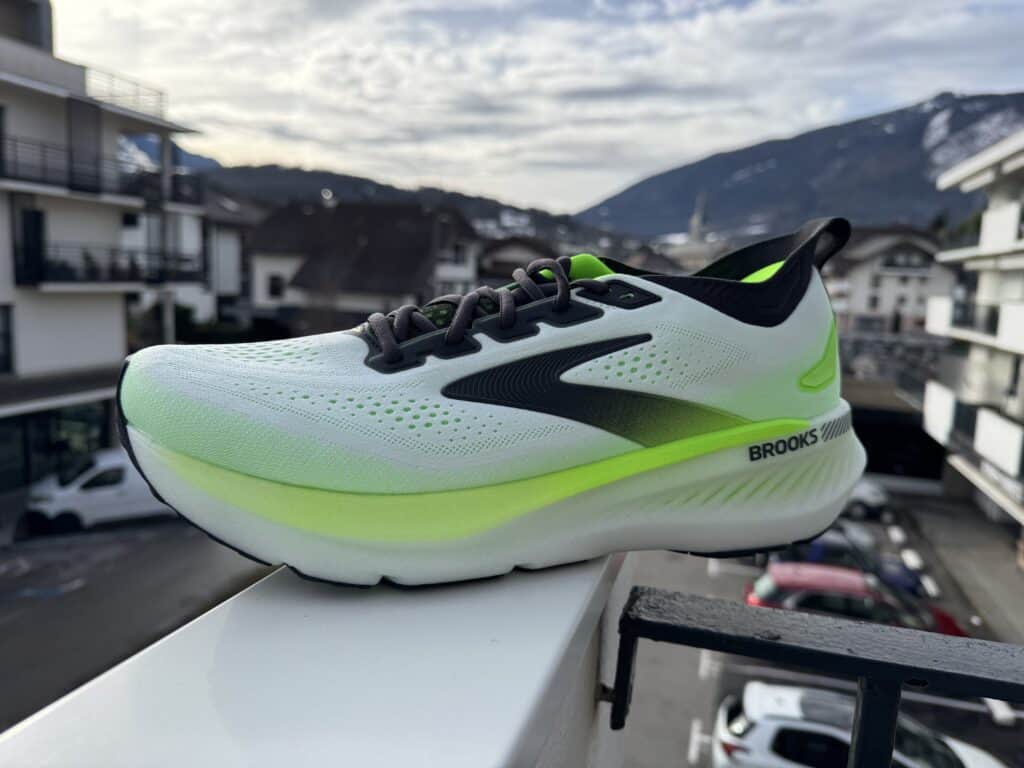
The GTS 23 gets a new engineered mesh upper with a lower-profile feel.
Key differences:
- Toe box feels a bit more snug than the GTS 22
- Not tight, but less forgiving
- If you’re borderline between standard and wide, you may want the wide version
The good news is that Brooks continues to offer narrow, standard, and wide fits, which is a big plus.
Check the latest prices on Amazon below:

Heel, Tongue & Overall Comfort
Some things haven’t changed — for better or worse.
- The tongue is still very padded
- Great for lockdown
- Slightly excessive for some people
- Heel padding remains generous
- External heel counter and pull tab are still there
- Overall feel is very premium
For walking, standing all day, and long periods on your feet, the GTS 23 is excellent — arguably better than the GTS 22 thanks to the lower drop and smoother ride.
Walking vs Running: Who Each Shoe Is Best For
For walking & standing
GTS 23 wins here
- Lower drop feels more natural
- Softer cushioning reduces fatigue
- Better choice for all-day comfort and long walks
For running
- GTS 23 is not a fast shoe
- Too heavy for tempo or speed work
- Best suited to:
- Easy runs
- Recovery runs
- Long, slow distances
If you need mild to moderate support under the arch, it works well.
If you want a firm, highly corrective stability shoe, the GTS 22 may actually suit you better.
So… Should You Upgrade?
Choose the Brooks Glycerin GTS 23 if:
- You want a smoother, bouncier ride
- You walk or stand a lot
- You prefer moderate stability rather than aggressive correction
- You like a lower heel-to-toe drop
Choose the Brooks Glycerin GTS 22 if:
- You want maximum stability
- You prefer a firmer, more controlling feel
- You find the GTS 23 too soft or too heavy
- You can get the GTS 22 at a good discount
Final Thoughts
The GTS 23 isn’t just a small update — it’s a direction change for the Glycerin GTS line. It’s more comfortable, more modern, and better for walking, but it’s no longer a true max-stability shoe.
If you’ve tried either model, I’d love to hear what you think — especially about the drop change. Let me know in the comments. If you want to keep up to date with the Brooks Line up you can read our overview.