If you’ve used the Cloudrunner before, you already know what this shoe has always been about.
It has never been ON’s most exciting or bouncy trainer.
But it has been one of their safest and easiest shoes to recommend for walking, standing all day and general everyday use.
Now we have the ON Cloudrunner 3, and although it looks very similar to the Cloudrunner 2, ON have actually changed far more than most people realise.
The real question is:
Have ON accidentally turned the Cloudrunner into one of their best walking shoes – or have they just made it heavier and more complicated than it needs to be?
I’ve been using both shoes side-by-side, and the differences are very clear once you get them on your feet.
ON Cloudrunner 3 vs Cloudrunner 2 – what’s actually changed?
One of the first changes is the drop.
The Cloudrunner 3 now uses an 8 mm drop, compared to the 10 mm drop in the Cloudrunner 2.
That already changes how the shoe feels through your lower leg and Achilles.
The bigger change, though, is the weight.
The Cloudrunner 3 comes in at around 311 g (men’s US 9), which is roughly 34 g heavier than the Cloudrunner 2.
That is a noticeable increase – especially if you’re wearing the shoe for long periods of time.
The midsole is still built with ON’s Helion superfoam, so the foam itself hasn’t changed dramatically.
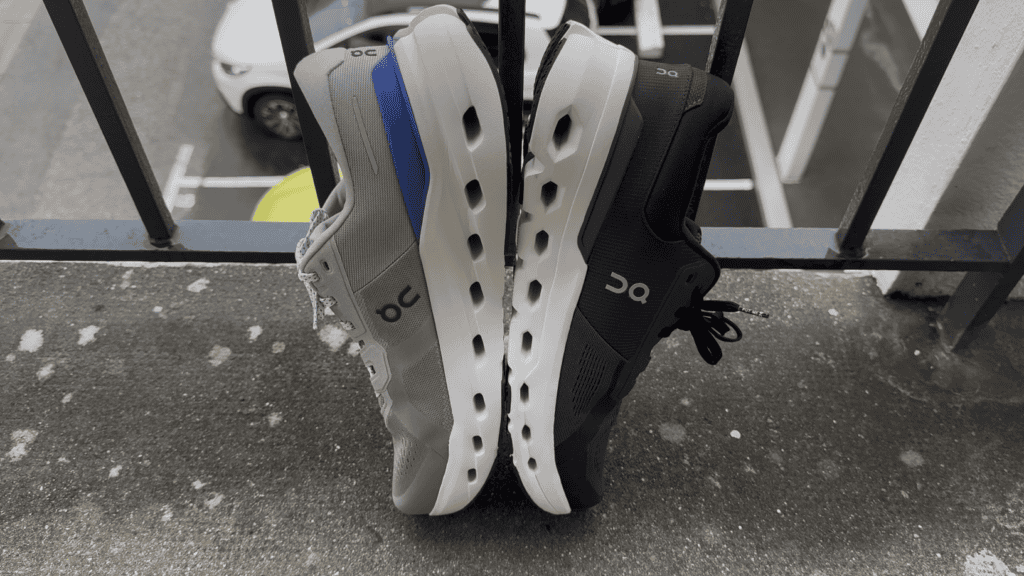
What has changed is the shape of the shoe and the orientation of the CloudTec pods.
In the Cloudrunner 3, the pods run more diagonally, and ON have completely redesigned the heel.
You now get a split, decoupled heel bevel instead of the flatter, less aggressive heel we had in the Cloudrunner 2.
That single update makes a big difference to how the shoe moves when your heel hits the ground.
Instead of feeling flat and blocky, the Cloudrunner 3 now rolls forward much more smoothly.
The biggest difference underfoot
The Cloudrunner 2 was stable and predictable, but it always felt quite flat and a little uninspiring to walk in.
The Cloudrunner 3 is still firm and controlled – but the transition from heel to forefoot is much smoother.
ON have also made the forefoot significantly stiffer and added a more noticeable rocker.
That gives you two very practical benefits:
- much better protection under the ball of the foot
- and an easier push-off when you walk
If you have big-toe stiffness, hallux rigidus, or forefoot sensitivity, this is a meaningful improvement over the Cloudrunner 2.
The trade-off is that the Cloudrunner 2 allowed a little more natural forefoot flexibility.
In the Cloudrunner 3, ON rely more on geometry and rocker to guide you forward.
Check the latest prices of the shoes on Amazon below:
Fit and upper – a big step forward
This is one of the strongest improvements in the new version.
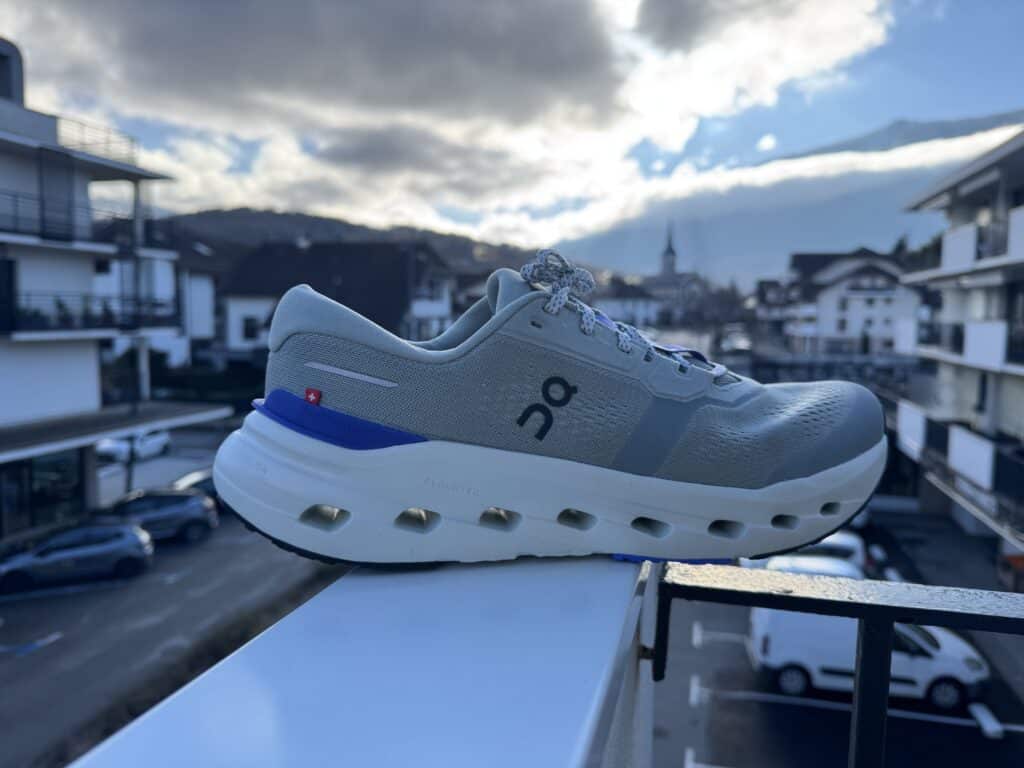
The Cloudrunner 3 uses a new engineered mesh and a revised shape that gives you:
- a much more secure midfoot fit
- noticeably better lockdown
- and more room for your toes to spread naturally
Historically, ON shoes have often felt too snug in the forefoot.
That is no longer the case here.
Under the forefoot, the platform is also wider, which adds to the stability and helps your foot feel more supported.
At the back of the shoe, there is now a rigid heel clip that wraps around the heel.
Combined with the raised sidewalls on both sides of the heel, the Cloudrunner 3 uses a very modern stability setup.
You can feel the medial sidewall slightly.
If you are extremely sensitive to any form of arch or inner-foot pressure, it is something to be aware of.
For most people, it simply feels secure rather than intrusive.
How does the Cloudrunner 3 feel for walking and standing all day?
This is where the Cloudrunner 3 really improves on the previous model.
The combination of:
- the new heel bevel
- a more pronounced forefoot rocker
- and a stiffer forefoot platform
makes longer walks noticeably easier than they were in the Cloudrunner 2.
You move off the heel faster and transition forward more smoothly, instead of lingering on the back of the shoe.
It is still a firm shoe.
The Cloudrunner line has always been built around control and predictability – and that remains true.
But the improved geometry makes the Cloudrunner 3 far more comfortable over longer distances than the Cloudrunner 2.
The improved fit and added forefoot protection also make a big difference if you spend long hours on your feet.
Check the latest prices of the shoes on Amazon below:
What I like about the Cloudrunner 3
There are three standout positives for me.
First, the fit.
The combination of a locked-in midfoot and a genuinely roomy toe box works extremely well.
Second, the new geometry.
The shoe finally moves with your stride rather than forcing you through a flat, rigid platform.
Third, the forefoot protection.
If you have soreness around the ball of the foot or stiffness through the big toe, this is a very noticeable upgrade.
And finally, the overall stability.
The heel clip, sidewalls and firm Helion midsole make the shoe feel very predictable and controlled.
The downsides you should know about
There are also some clear trade-offs.
The biggest one is the weight.
At over 300 grams, the Cloudrunner 3 is a heavy everyday shoe.
For many people, it simply does not need to be this heavy to deliver stability.
The second downside is that, despite the improved transitions, the shoe still does not feel lively.
The Cloudrunner 3 is controlled and stable – not springy or energetic.
The third point is the lower drop.
Some people specifically liked the Cloudrunner 2 because the higher drop helped to offload the Achilles slightly more.
The move to an 8 mm drop will not suit everyone.
Is the Cloudrunner 3 a good running shoe?
It works very well for:
- easy runs
- steady mileage
- relaxed daily training
It feels secure, predictable and very stable.
Where it falls short is for faster running.
Because of the weight and the firm, controlled midsole, it is not well suited to:
- tempo runs
- intervals
- or quicker workouts
It is clearly built for comfort and stability rather than speed.
Should you upgrade from the Cloudrunner 2?
If you liked the Cloudrunner 2 mainly because it was:
- simple
- lighter
- and more flexible in the forefoot
you may actually prefer to stick with it.
But if you want:
- a better fitting shoe
- smoother heel-to-toe transitions
- more forefoot protection
- and stronger stability features
the Cloudrunner 3 is a meaningful step forward.
Final verdict
Despite being marketed as a running shoe, the ON Cloudrunner 3 now makes far more sense as a walking-first and all-day shoe.
It offers:
- excellent fit and lockdown
- very strong stability
- smoother transitions than the Cloudrunner 2
- and far better protection under the forefoot
It still works for easy running, but it is not designed for speed or performance sessions.
If you want a stable, secure and protective shoe for longer walks, standing all day and general daily use, the Cloudrunner 3 is one of the strongest options in ON’s current lineup.
If you prefer a lighter, simpler and more flexible feel, the Cloudrunner 2 may still be the better choice for you.