
ON have been knocking it out of the park this year. First with the Cloudrunner 3, their stability-focused daily trainer, and now with the release of the ON Cloudmonster 3.
At first glance, the Cloudmonster 3 looks almost identical to the Cloudmonster 2 on paper. The stack height is the same, the drop is unchanged, and the weight remains almost identical. Both shoes also use ON’s Helion midsole foam and Speedboard plate through the midsole.
But once you actually put the Cloudmonster 3 on your foot, you quickly realise something has changed. The ride feels smoother, the forefoot is more flexible, and the transition from heel to toe feels far more natural when walking or running.
So the real question is: Is the Cloudmonster 3 a meaningful upgrade over the Cloudmonster 2?
And how does it compare to another popular daily trainer like the New Balance 1080 v15?
Let’s take a closer look.
Key Specs: ON Cloudmonster 3
From a specifications perspective, ON has kept things very similar to the previous model.
- Stack height: 35 mm heel / 29 mm forefoot
- Drop: 6 mm
- Weight: 295 g (men’s US 9)
This still places the Cloudmonster firmly in the category of max-cushion daily trainers rather than lightweight running shoes.
The fit also remains very similar to the previous version. The shoe fits true to size in length, but the forefoot is slightly wider than before, making it more accommodating for runners with broader feet.
If you liked the fit of the Cloudmonster 2, you’ll likely feel comfortable in the Cloudmonster 3.
Cushioning and Midsole Changes
The biggest changes to the Cloudmonster 3 happen in the midsole and ride feel.
The Cloudmonster 2 used a relatively firm Helion midsole combined with large CloudTec pods. This created a very distinctive ride that felt structured and stable, but also slightly rigid for some runners.
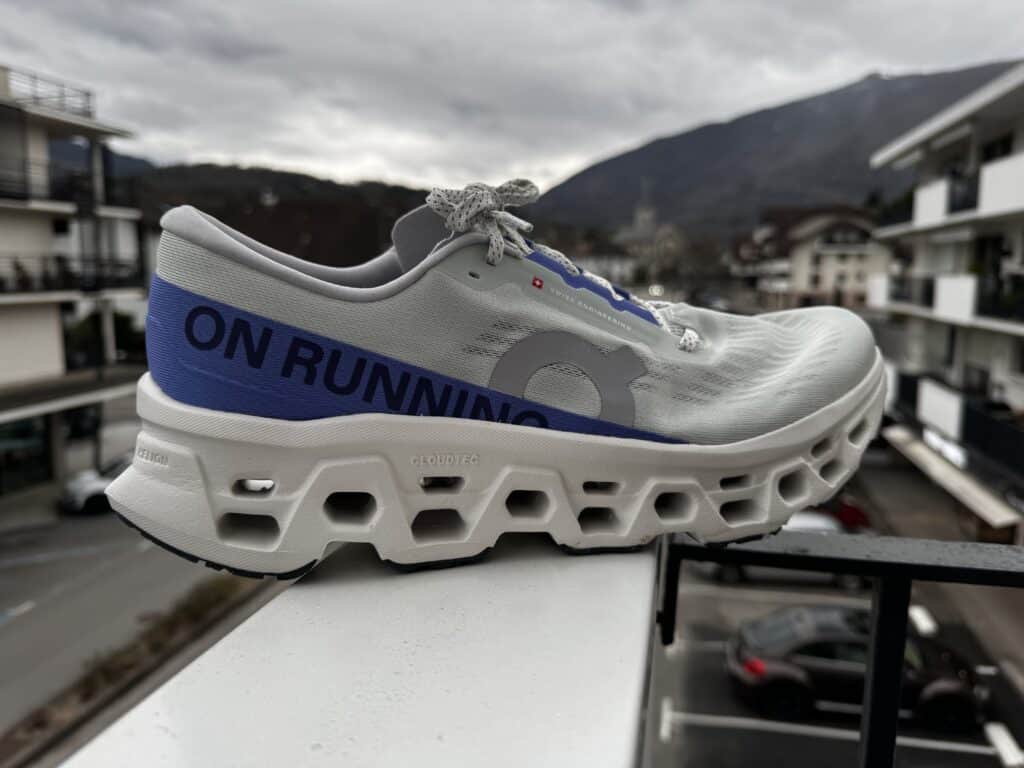
In the Cloudmonster 3, ON has introduced what they call a Triple-Air CloudTec Helion system.
The midsole is still made from Helion foam, but the structure of the pods underneath the foot has been redesigned. This changes how the shoe compresses when you land and how it rebounds as you move forward.
The result is a ride that feels noticeably smoother and more fluid from heel to toe.
Check the latest prices on Amazon below:
Geometry and Rocker Changes
Another key update is the geometry of the shoe.
ON has added a posterior lateral flared heel bevel, which means the rear of the shoe is slightly extended. This helps smooth out the landing phase when your heel first contacts the ground.
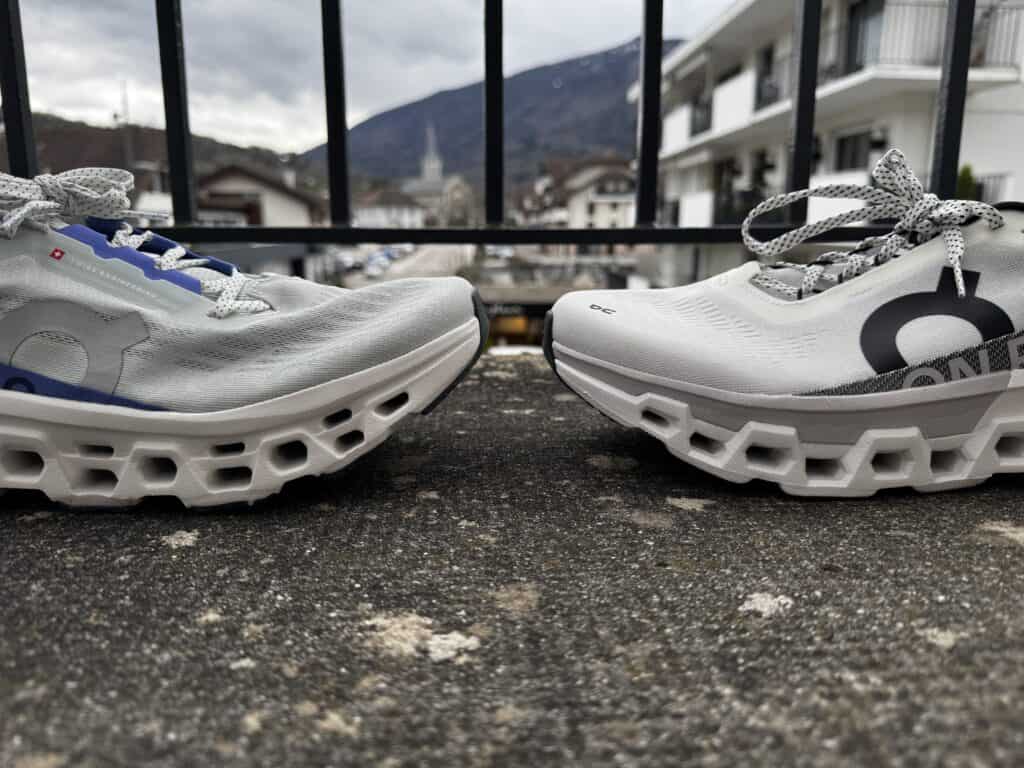
The Cloudmonster 3 also has a more aggressive forefoot rocker compared to the previous version. This creates a smoother transition into the toe-off phase of the gait cycle.
In practice, this makes the shoe feel more fun and more efficient to run or walk in, particularly at steady daily training paces.
The forefoot is also more flexible than the Cloudmonster 2, but it has significantly more toe spring. That design improves the forward roll of the shoe, although it may not suit everyone from a clinical perspective.
Stability: A Neutral Shoe That Feels Surprisingly Supportive
Despite being a neutral running shoe, the Cloudmonster 3 feels very stable underfoot.
There are several reasons for this:
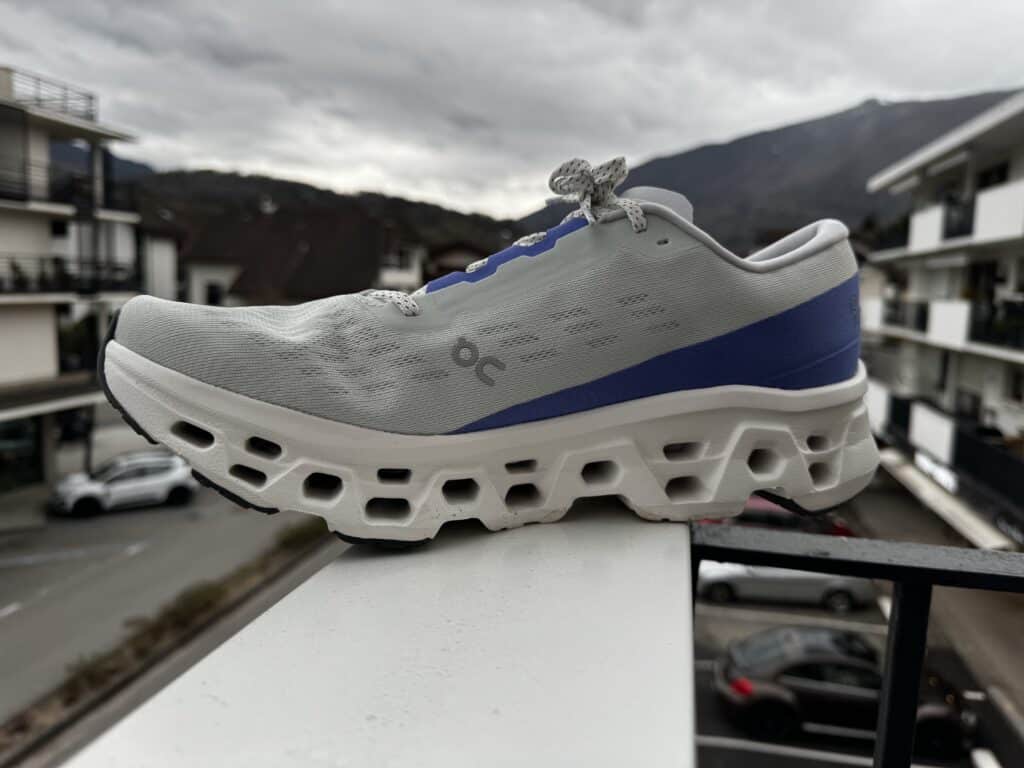
- A wider heel platform than the Cloudmonster 2
- Mild sidewalls around the heel and midfoot
- The structural support from the Speedboard plate
Together, these features create a ride that feels more like a stable neutral shoe rather than a traditional neutral trainer.
For runners who want cushioning but still appreciate a stable platform, this design works very well.
Check the latest prices on Amazon below:
Upper and Fit
The upper has also received a welcome update.
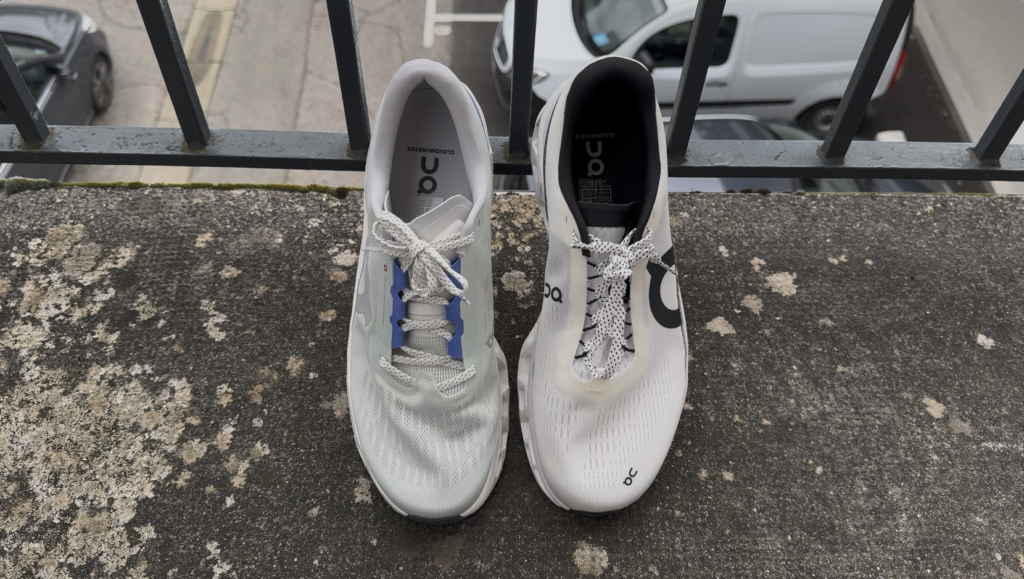
The Cloudmonster 2 used a lightweight engineered mesh, but the Cloudmonster 3 features a more refined mesh upper that feels slightly more structured and durable.
Other improvements include:
- A thin gusseted tongue that improves midfoot lockdown
- A stiffer heel counter for added rearfoot stability
- A less tapered toe box, making the fit more accommodating
Overall, this is one of the best-fitting ON shoes released this year.
What I Like About the Cloudmonster 3
Several aspects of the shoe stand out.
Smoother Ride
The redesigned CloudTec construction and rocker geometry create a much smoother heel-to-toe transition compared to the Cloudmonster 2.
Stable Platform
Despite being a neutral shoe, the wide platform and Speedboard structure provide excellent stability for a max-cushion trainer.
Versatility
The Cloudmonster 3 works well for:
- Long walks
- Daily runs
- Easy mileage
- All-day wear
Improved Upper
The updated mesh upper feels more secure and slightly more premium.
What I Don’t Like
No shoe is perfect, and there are a couple of downsides.
Weight
At 295 grams, the Cloudmonster 3 is still relatively heavy.
That’s not a problem for easy runs or walking, but it means the shoe isn’t particularly suited for tempo sessions or faster workouts.
Price
The Cloudmonster 3 costs around $190, which places it at the top end of the daily trainer market.
At that price point, many competitors offer more advanced foam compounds.
For example, the New Balance 1080 v15 uses a softer, more modern midsole foam, which gives it a slightly more energetic ride.
ON Cloudmonster 3 vs New Balance 1080 v15
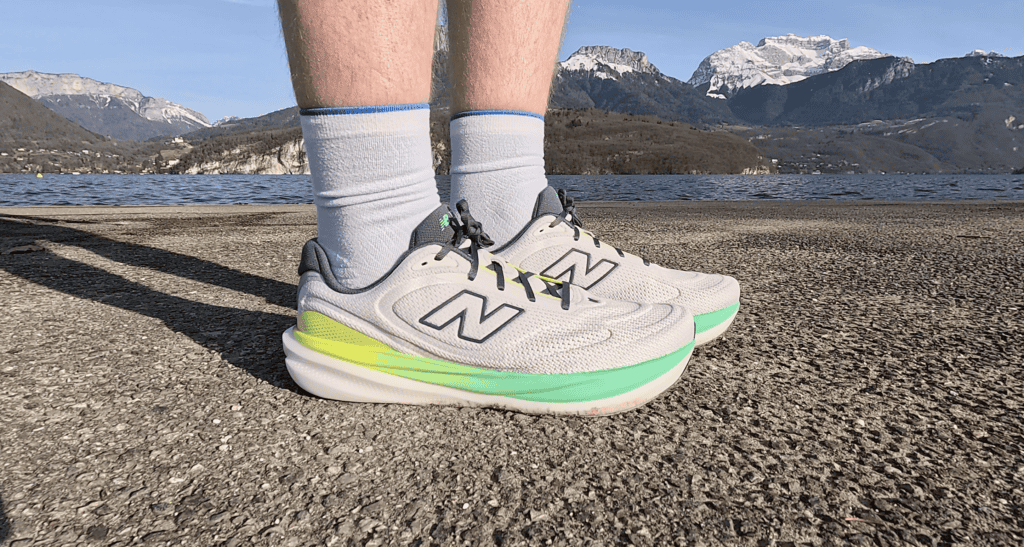
When comparing the Cloudmonster 3 to the New Balance 1080 v15, the biggest difference is the cushioning feel.
The 1080 uses Fresh Foam X, which feels noticeably softer when you land. You sink into the foam more compared to the firmer Helion midsole of the Cloudmonster.
However, the softer cushioning also means the 1080 has a flatter geometry and a less aggressive rocker.
As a result, the Cloudmonster 3 transitions from heel to toe more smoothly, thanks to its rocker-driven design.
Another key difference is stability.
The Cloudmonster feels more structured and stable due to its wider platform and firmer cushioning. The 1080, by contrast, feels like a more traditional neutral running shoe.
The 1080 v15 is also significantly lighter, which allows it to handle faster running paces better than the Cloudmonster.
So the choice largely depends on what you prioritise:
- Softer and lighter: New Balance 1080 v15
- More stable with a strong rocker: ON Cloudmonster 3
Clinical Perspective
From a clinical standpoint, the 6 mm drop and rocker geometry of the Cloudmonster 3 can be beneficial for many runners.
The moderate drop helps reduce strain on the Achilles tendon and calf muscles, while the rocker assists forward motion through the gait cycle.
However, the high level of toe spring combined with forefoot flexibility may not be ideal for people with:
- Hallux rigidus (big toe arthritis)
- Forefoot pain or metatarsalgia
In those cases, a shoe with a stiffer forefoot platform may be more appropriate.
Final Verdict: Is the Cloudmonster 3 an Upgrade?
The ON Cloudmonster 3 isn’t a complete redesign, but it is a thoughtful refinement of the previous model.
It maintains the same stack height, drop, and stable platform but improves the smoothness of the ride and the overall transition through the gait cycle.
If you enjoyed the Cloudmonster 2, you’ll likely appreciate the smoother feel of the Cloudmonster 3, which is why it’s one of the models we often recommend in our guide to the best On Cloud walking shoes.
But if you’re looking for a softer, lighter, more performance-oriented daily trainer, you may prefer alternatives like the New Balance 1080 v15.


