Last year the New Balance 1080 v14 quietly became one of the most comfortable walking shoes you could buy.
But the latest model, the 1080 v15, has moved more in the direction of a running shoe than a walking shoe. And that has created a bit of a gap in the New Balance lineup.
Most running shoes are designed around speed and forward momentum. That works very well when you’re running. But when you’re walking slowly or standing for long periods, those same shoes can sometimes feel a little unstable or inefficient.
So that raises an interesting question.
Did New Balance create the New Balance Ellipse to solve that problem?
After testing the shoe over 10,000 steps per day for several days, I think they might have.
The Problem With Most Walking Shoes
Most people assume that the most comfortable walking shoe is simply a soft shoe.
But softness alone doesn’t actually solve the real problems people experience when walking longer distances.
After several thousand steps many shoes start to feel:
- slightly unstable
- a bit flat and inefficient
- or surprisingly tiring.
This often happens because cushioned running shoes are designed to compress and rebound quickly. That’s ideal when you’re running, but when you’re walking slowly the same design can actually make the shoe feel less stable and less efficient over time.
That’s where the New Balance Ellipse starts to feel different.
Where the Ellipse Fits in the New Balance Range
The Ellipse is a completely new model from New Balance.
It sits between two of their most popular shoes:
- New Balance 880 v15 – a firmer everyday trainer
- New Balance 1080 V15 – their premium cushioned running shoe
But when you actually walk in the Ellipse, it doesn’t really feel like either of them.
After testing it on longer walks, it actually feels more like a lifestyle walking shoe than a running shoe.
And the interesting part is why.
Check the latest prices on Amazon below:
Cushioning: Soft But Controlled
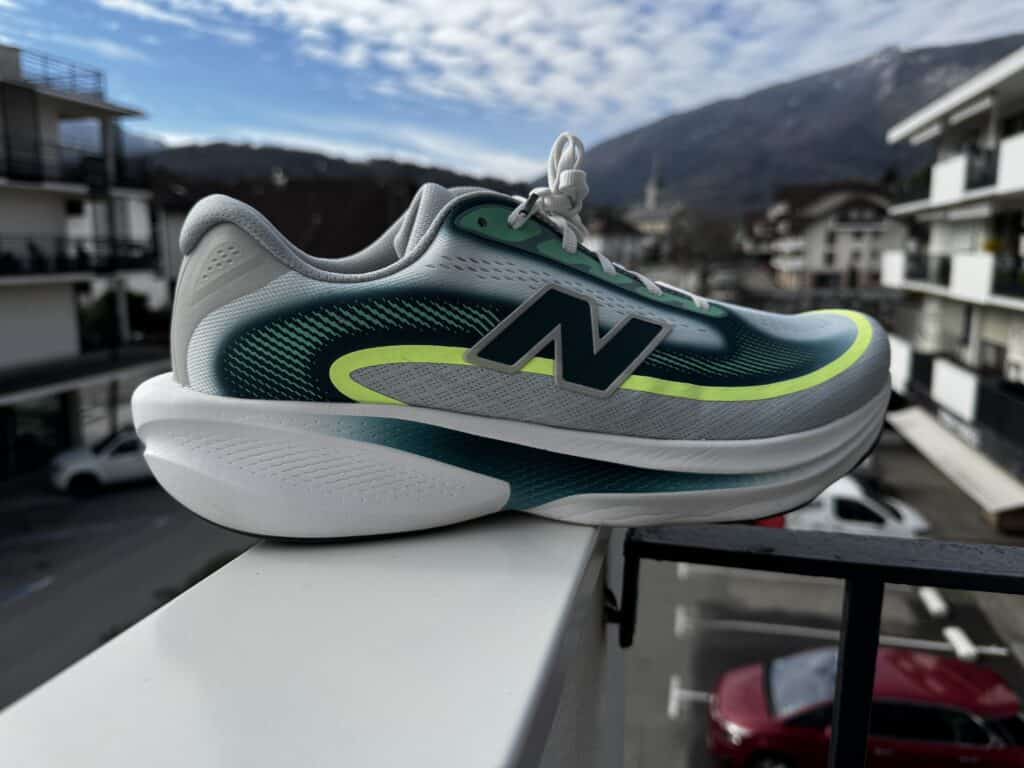
The Ellipse uses Fresh Foam X cushioning, which is the same foam New Balance uses in many of its premium models.
When you first put the shoe on, the cushioning feels soft straight away. But it’s not overly mushy.
Instead, your foot sinks slightly into the foam, which gives a comfortable pillow-like feel underfoot.
One of the problems with very soft running shoes is that when you walk slowly in them they can feel slightly unstable or wobbly.
The Ellipse avoids that.
The foam compresses just enough to absorb impact while still feeling controlled when you’re walking. That balance between softness and stability is actually quite difficult to get right.
But interestingly, the cushioning itself isn’t the main reason this shoe works so well for walking.
The Geometry That Makes Walking Easier
The real difference becomes clear when you look at the shape of the midsole.
At the back of the shoe there is a posterior heel bevel, which smooths out the landing when your heel hits the ground. Instead of the heel dropping straight down, the shoe helps guide your foot forward into the next step.
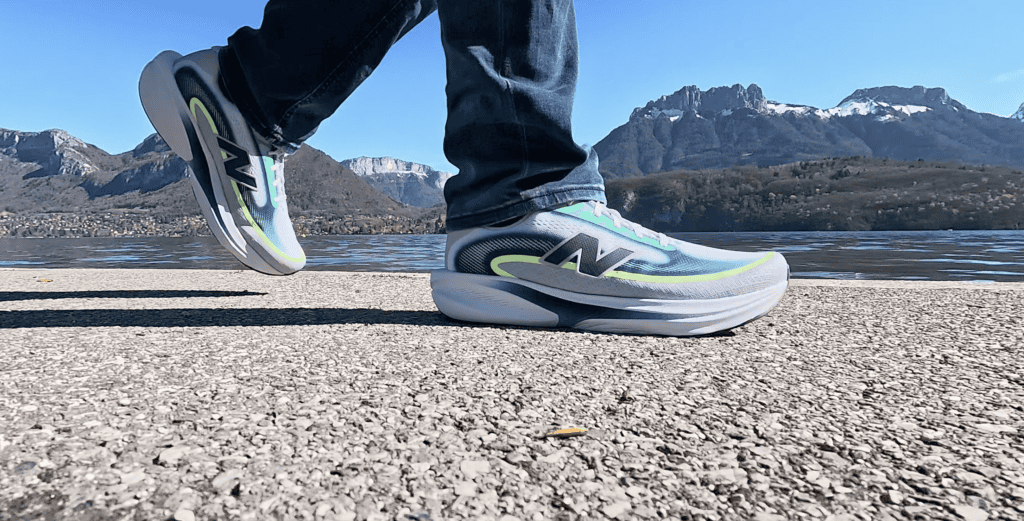
Then through the front of the shoe there is an early to mid-foot rocker.
That slight curve helps your foot roll forward naturally when walking.
This might sound like a small technical detail, but when you’re walking thousands of steps it can make a noticeable difference. Instead of pushing through every step, the shoe almost helps carry you forward.
But there is another feature that surprised me even more.
Check the latest prices on Amazon below:
A Wider Platform for Stability
When you flip the shoe over, you can see that the platform of the Ellipse is quite wide.
In fact, the base is actually wider than the New Balance 1080 v15.
That wider platform gives the shoe a noticeably more stable feel when walking. Your foot feels supported underneath you and the shoe doesn’t feel like it’s tipping from side to side.
This is something that can happen in softer shoes that have a narrower base.
Interestingly, the wider platform reminds me quite a bit of the 1080 v14, which many people found extremely comfortable for walking.
And that’s where the Ellipse starts to feel quite different from the newer 1080 v15.
The 10,000 Step Test
A walking shoe shouldn’t just feel comfortable for the first few minutes. The real test is how it feels after several thousand steps.
So I decided to test the Ellipse properly.
I wore the shoe over several days while walking more than 10,000 steps per day, paying attention to three things:
- how stable the shoe felt
- how easy it was to keep walking
- and whether my feet felt more or less tired compared to other shoes I regularly wear.
Something interesting started to happen.
Instead of the cushioning feeling softer and less supportive over time, the shoe actually started to feel easier to walk in the longer the walk went on.
The rocker helps guide your stride forward. The cushioning absorbs impact. And the wider platform keeps everything feeling stable.
Instead of working through each step, the shoe almost feels like it reduces the effort required to walk.
That combination is exactly why many people prefer a shoe designed primarily for walking rather than running.
Upper, Fit and Comfort
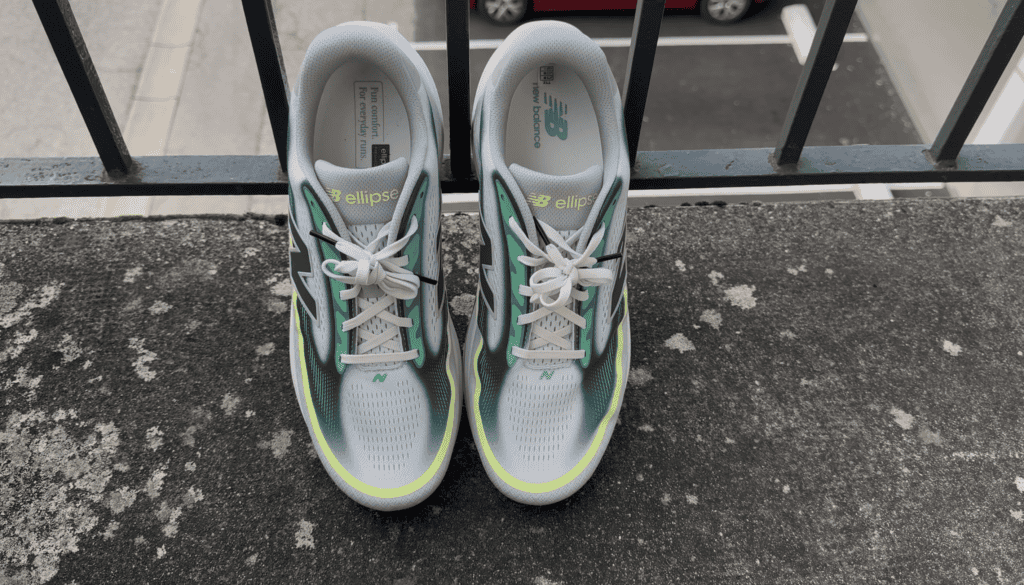
The Ellipse uses an engineered mesh upper that feels breathable and comfortable.
The fit is true to size, and there’s a good amount of space in the toe box, which can make a big difference if you’re wearing the shoe all day.
Around the heel the counter is fairly flexible, although it does tilt inward slightly. That may not be ideal if you have a Haglund deformity or sensitivity around the back of the heel.
Check the latest prices on Amazon below:
Flexibility and Foot Conditions
The forefoot of the Ellipse is also quite flexible.
For most people, walking this actually feels quite natural. But if you have conditions like hallux rigidus, where bending through the big toe joint is painful, you may prefer a shoe with a stiffer forefoot rocker.
A good alternative in that situation would be something like the Hoka Transport 2, which is one of the few shoes designed specifically for walking.
Ellipse vs 880 vs 1080
So where does the Ellipse sit in the New Balance lineup?
Compared with the 880 V15, the Ellipse feels softer and more cushioned.
Compared with the 1080 V15, the Ellipse feels less bouncy but slightly more stable.
So it sits somewhere in the middle.
You get the comfort of the older 1080 models, but with a more stable platform that feels closer to the 880.
That combination works particularly well if you’re walking long distances or standing all day.
Final Thoughts
Coming back to the question we started with:
Did New Balance create the Ellipse to replace the walking comfort people liked in the older 1080 models?
After testing the shoe over 10,000 steps per day, I actually think the answer might be yes.
The 1080 v15 is clearly a more running-focused shoe than previous versions. And that means the Ellipse ends up being a better walking shoe than the newest 1080.
With its soft but controlled cushioning, smooth rocker and wide stable platform, I wouldn’t be surprised if the New Balance Ellipse quietly becomes New Balance’s bestselling walking shoe in 2026.