The HOKA Clifton 9 was one of the best daily running shoes HOKA had made in years.
It was light, smooth, comfortable, and for a lot of runners, it had exactly what made the Clifton line so popular in the first place. Then came the Clifton 10.
With the Clifton 10, HOKA increased the stack height, changed the drop from 5mm to 8mm, and the shoe suddenly felt more like a max-cushion cruiser than the snappy daily trainer many Clifton fans loved. Some runners liked the extra cushioning, but a lot of long-time Clifton users felt it had lost some of that classic Clifton feel.
Now we have the HOKA Clifton 11.
I bought these myself, so this review is not sponsored, and these are my independent thoughts after testing the shoe.
On paper, the Clifton 11 looks very similar to the Clifton 10. You still have an 8mm drop, a similar stack height, a similar weight, and HOKA are still using a compression-moulded EVA midsole. So the big question is simple: has HOKA done enough with the Clifton 11 to justify buying it, or is it too similar to the Clifton 10?
HOKA Clifton 11: What has changed?
At first glance, the Clifton 11 is still very close to the Clifton 10.
You still have that high-stack, 8mm drop platform, a very similar weight, and HOKA are still using their compression-moulded EVA midsole. So if you were hoping HOKA would go straight back to the lighter, lower-drop Clifton 9 feel, that has not happened here.
But the Clifton 11 is not just the Clifton 10 with a new colourway.
There is a new open-cell structure insole, an updated upper, a slightly more accommodating fit, and the shoe feels smoother through the forefoot. The toe box also feels better than before. It is still not anatomical, and it is not as wide as something like the HOKA Gaviota 6, but for a Clifton, there is definitely more space through the front of the shoe.
HOKA Clifton 11 specs
The HOKA Clifton 11 is a neutral daily trainer. Think easy runs, steady miles, walking, treadmill sessions, and everyday use.
It is not built for speed. It is built to be comfortable, smooth, and reliable.
Price-wise, it comes in at around €160 in Europe or $155 in the US, depending on where you buy it. The stack height is still firmly in that max-cushion category, around 42mm in the heel and 34mm in the forefoot, giving you an 8mm drop.
So if you were hoping this would feel more like the Clifton 9 again, I do not think it does. The Clifton 11 improves on the Clifton 10, but it has not gone back to that snappier Clifton 9 feel.
Weight-wise, it is very similar to the Clifton 10. It is not the lightest shoe in the category, but for the amount of cushioning underfoot, it still feels reasonably light.
The upper is a new technical mesh upper. It has a comfortable amount of padding around the heel, a secure midfoot lockdown, and a more accommodating forefoot than before.
The midsole is HOKA’s CMEVA, paired with the updated open-cell structure insole. There is no plate, no dual-density support system, and no superfoam. It is still a fairly traditional midsole setup combined with HOKA’s rocker geometry.
The outsole has rubber coverage in the main high-wear areas. It is not full rubber coverage, which helps keep the weight down, but it should be fine for normal road running, walking, treadmill use, and everyday wear.
Grip has been adequate so far without being a standout feature. On dry roads, pavements, and treadmill runs, I had no issues. It has been very hot here in Annecy, so I have not had the chance to test it properly on wet roads yet.
Check the latest prices below:
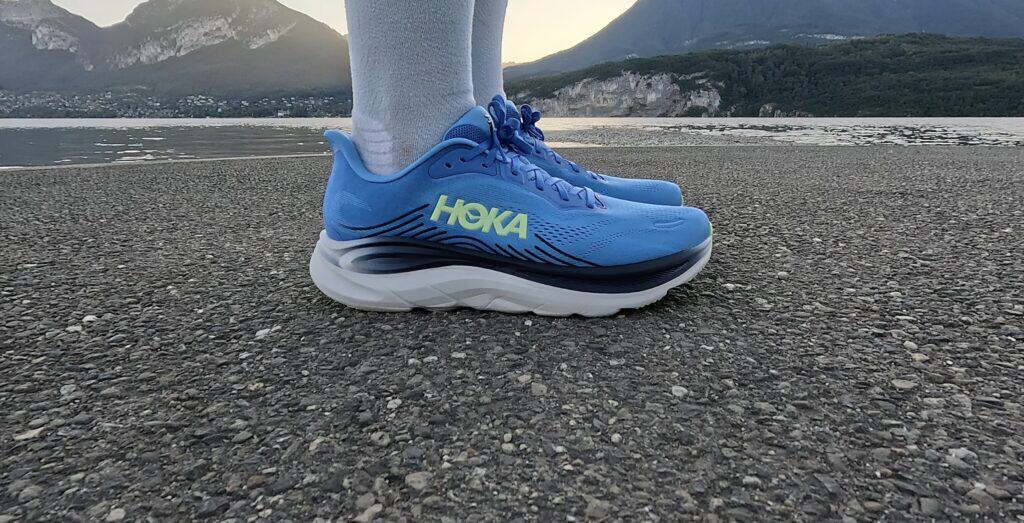
HOKA Clifton 11 fit and sizing
For sizing, I would say the HOKA Clifton 11 runs true to size for most people.
The upper feels a bit more forgiving than before, and there is more room through the forefoot compared to previous Clifton models. If you have a narrow to normal-width foot, your normal running shoe size should be fine.
If you are between sizes, or if you have a wider forefoot, I would try the wide version rather than automatically sizing up.
The toe box is better, but it is still not anatomical. It is not an Altra or Topo-style foot shape, and it is not as wide as the HOKA Gaviota 6. But for a Clifton, this is a clear improvement.
The upper feels less restrictive, the midfoot hold is secure, and I had no problems with heel slip.
Check the latest prices below:
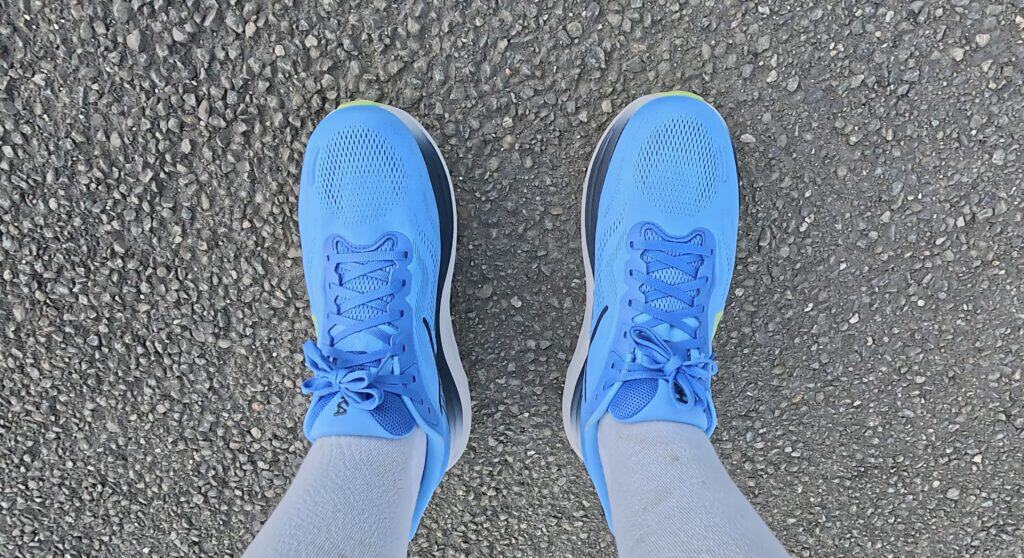
HOKA Clifton 11 ride
The ride is probably the biggest improvement in the Clifton 11.
This still feels recognisably like a Clifton, but it is a better version of the Clifton 10. The midsole itself does not feel dramatically different. This is not suddenly a superfoam shoe. But the overall feel is better, and I think that comes from the new insole, the smoother transition, and the slightly more flexible forefoot.
The Clifton 10 could feel a bit stiff through the front of the shoe. The Clifton 11 rolls through more easily, feels less blocky underfoot, and is simply easier to run in.
It is not a fast shoe, but it is an easy shoe to run in. And for a daily trainer, that matters.
Is the HOKA Clifton 11 stable?
The Clifton 11 is not a stability shoe, but it is a very stable neutral shoe.
You have a broad base, some guidance from the sidewalls, and foam that does not feel too soft or wobbly. That makes it a good option for newer runners, walkers, or anyone who wants plenty of cushioning without feeling unstable.
This is where the Clifton 11 works well as a max-cushion daily trainer. It gives you protection underfoot, but it still feels controlled.
What is the HOKA Clifton 11 best for?
The Clifton 11 works best for easy runs, recovery runs, treadmill sessions, walking, travelling, and everyday wear.
It is not exciting, but it is very easy to live with.
If you want one shoe that can cover relaxed daily miles, long walks, gym use, and general lifestyle wear, the Clifton 11 makes a lot of sense.
Check the latest prices below:
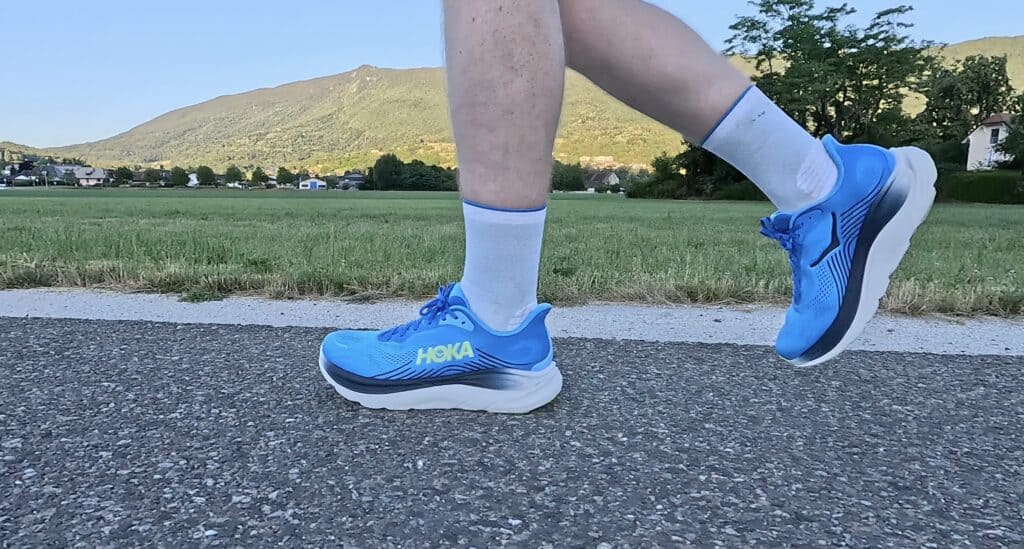
Where does the Clifton 11 fall short?
The first issue is that the midsole still feels a little dated.
The updated open-cell structure insole does help the shoe feel a bit bouncier and more comfortable underfoot, and the ride is smoother than the Clifton 10. But underneath that, this is still compression-moulded EVA.
Compared to newer foams, it does not have that energetic feel. It does not have the bounce of something like the ASICS Novablast, the soft premium feel of the ASICS Gel Nimbus 28, or the lighter, more responsive feel of the New Balance 1080 v15.
The second issue is the pace range.
The Clifton 11 is best at easy to steady paces. It is comfortable for daily mileage, recovery runs, and slower long runs. But when you start picking up the pace, it does not really come alive.
The foam is not especially responsive, and although the forefoot is more flexible than before, this still does not feel like a shoe that wants to go fast.
If you want one shoe for easy runs, tempo runs, intervals, and race day, there are better options out there.
This is much more of a comfort-first daily trainer.
HOKA Clifton 11 vs Clifton 9
If you loved the Clifton 9 because it was lighter, lower-drop, and had that snappier daily trainer feel, the Clifton 11 may still not be what you are looking for.
The drop is still 8mm, the stack is still high, and the shoe still feels more built-up than the older Clifton models.
The Clifton 11 is better than the Clifton 10, but it is not a return to the Clifton 9.
HOKA Clifton 11 vs ASICS Gel Nimbus 28
The ASICS Gel Nimbus 28 is the more expensive shoe, coming in at around €200, so there is a decent price jump compared to the Clifton 11.
The Nimbus feels softer underfoot, especially through the heel. It also has a stiffer forefoot and a more aggressive rocker geometry, which gives it a slightly more efficient feel when you start moving faster.
The Nimbus is also a little bit lighter, so although it is still a max-cushion comfort shoe, I think it has a slightly wider pace range than the Clifton.
I would choose the ASICS Gel Nimbus 28 if you want a softer, more premium-feeling shoe that can handle some steady or uptempo running.
I would choose the HOKA Clifton 11 if you want something cheaper, more stable, less aggressive, and easier to use for relaxed runs, walking, and everyday wear.
HOKA Clifton 11 vs New Balance 1080 v15
The New Balance 1080 v15 is a big upgrade from the 1080 v14, and it is still more expensive than the Clifton 11, coming in at around €180.
It feels more modern underfoot. It is softer, lighter, and has more bounce from the new Infinion midsole. But it also has less foam underfoot, and because that foam is softer, it does not feel quite as stable as the Clifton.
The Clifton 11 feels more like a stable max-cushion daily trainer. There is more structure underfoot, the platform is broader, and it gives you a more controlled ride.
I would choose the New Balance 1080 v15 if you want a softer, lighter, more responsive shoe for daily runs and the occasional quicker effort.
I would choose the Clifton 11 if you want the more stable max-cushion option for easier runs, walking, and lifestyle use.
HOKA Clifton 11 verdict
So, do I recommend the HOKA Clifton 11?
Yes, but it depends what you want from it.
If you were hoping this would go back to the Clifton 9 feel, I do not think it does. The stack is still high, the drop is still 8mm, and it feels more built-up than the older Clifton models.
But compared to the Clifton 10, I do think it is a better shoe.
The ride is smoother, the forefoot feels more flexible, the transition is better, and the toe box is more accommodating. The updated open-cell structure insole also gives a nicer step-in feel and may be part of why it feels a little bit bouncier underfoot.
It is not as soft and premium as the ASICS Gel Nimbus 28, and it is not as light or responsive as the New Balance 1080 v15.
But if you want a comfortable, stable, max-cushion daily trainer for easy runs, walking, treadmill sessions, and everyday use, the HOKA Clifton 11 is a solid update.