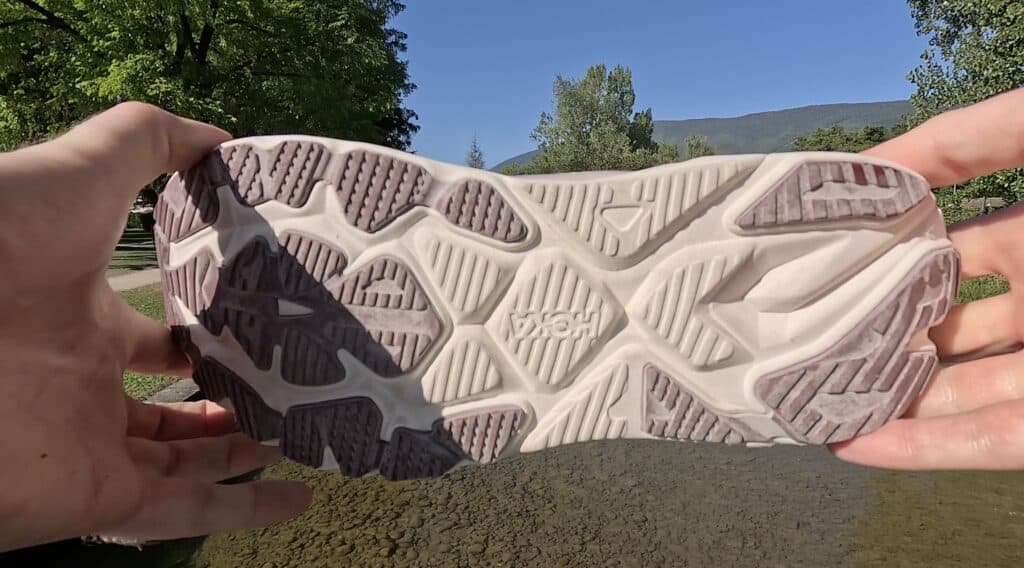
At first glance, the HOKA Arahi 9 looks like a fairly minor update to the Arahi 8. The stack height and heel-to-toe drop are unchanged, the outsole layout is very similar, and both shoes sit within the same highly cushioned stability category.
However, they didn’t feel the same when I tested them.
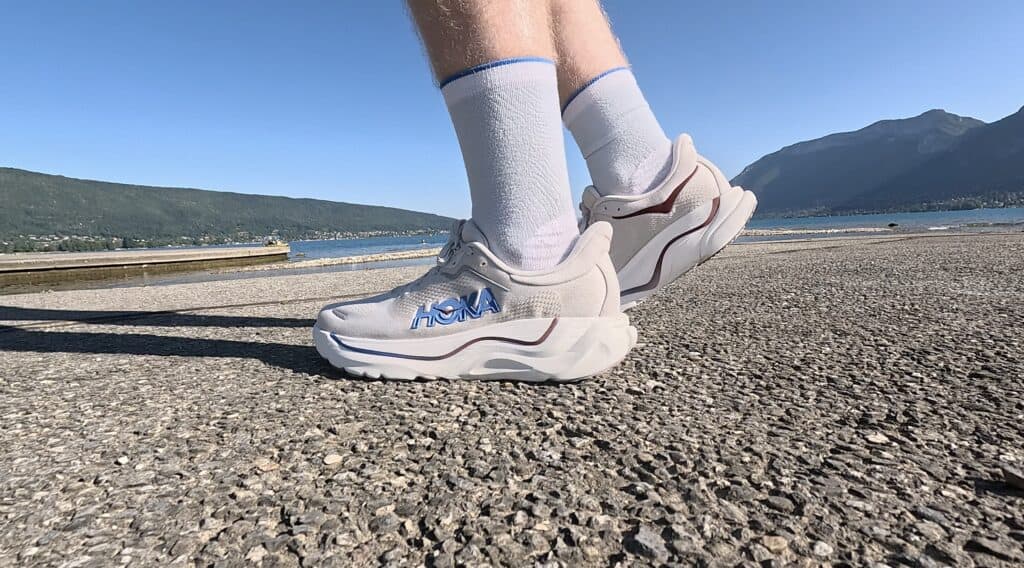
The Arahi 9 has a roomier toe box, a more breathable upper and a slightly different form of support underneath the foot. It feels more structured around the inner heel and early part of the arch, without becoming noticeably stiff or intrusive.
Does that make the HOKA Arahi 9 worth buying, or should you save some money and pick up the Arahi 8 while it is still available at a discount? Let’s look at how the two shoes compare.
HOKA Arahi 9 vs Arahi 8: The key differences
The five most important differences are:
- The Arahi 9 has a new technical mesh upper.
- Its toe box is wider and less tapered.
- The enhanced H-Frame creates more support around the inner heel.
- The Arahi 9 feels slightly more structured and less soft in the heel.
- It is marginally heavier than the Arahi 8.
The dimensions and overall purpose of the shoe remain largely unchanged.
Both shoes have 39 mm of cushioning under the heel and 31 mm under the forefoot, giving them an 8 mm heel-to-toe drop.
In my US men’s size 12, the Arahi 9 weighs 316g compared with 307g for the Arahi 8. That is only a 9g difference, but it continues the Arahi’s move away from being a relatively light and snappy stability shoe.
Does the Arahi 9 feel more supportive?
The most interesting change is not the stack height or the amount of cushioning. It is how the Arahi 9 provides stability.
HOKA has used an enhanced H-Frame, similar in principle to the support system found in the Gaviota 6. In the Gaviota, this feature contributes to a noticeably stiffer ride. I didn’t find that to be the case in the Arahi 9, but I could feel a subtle change in how the cushioning compressed beneath my foot.
The inner side of the heel doesn’t compress quite as softly as it does in the Arahi 8. This creates a little more resistance underneath the medial heel and the early part of the arch, gently encouraging the foot away from excessive inward movement.
That distinction is important.
Some modern stability shoes mainly use a wide platform, sole flare and raised sidewalls to keep your foot centred. The Arahi 9 still uses those features, but it also gives you a more noticeable degree of support beneath the inner heel.
It doesn’t feel like an aggressive traditional medial post, and I wouldn’t describe the support as intrusive. It is still relatively subtle. However, people specifically looking for some pronation control may appreciate the Arahi 9 more than those who simply want a broad and stable platform.
Check the latest prices below:
Cushioning and ride
Both shoes have the same stated stack height, but the Arahi 9 feels slightly more structured underfoot.
The heel doesn’t seem to sink into the cushioning quite as much. Instead, the enhanced H-Frame creates a gentle sensation of the foot being guided slightly towards the outside.
This also means the Arahi 9 doesn’t feel quite as soft or bouncy through the heel as the Arahi 8.
It is a subtle difference rather than a complete transformation, and some runners may barely notice it. For me, it was consistent enough during testing to be worth highlighting, particularly for anyone choosing the Arahi because they want support rather than softness alone.
The transition through the shoe remains smooth. There is a heel bevel to help you move forwards after landing, followed by HOKA’s familiar forefoot rocker.
This makes both versions work well at easier and steadier paces, when comfort and consistency matter more than outright speed.
The Arahi 9 has a better toe-box fit
For me, the upper is the clearest reason to choose the Arahi 9.
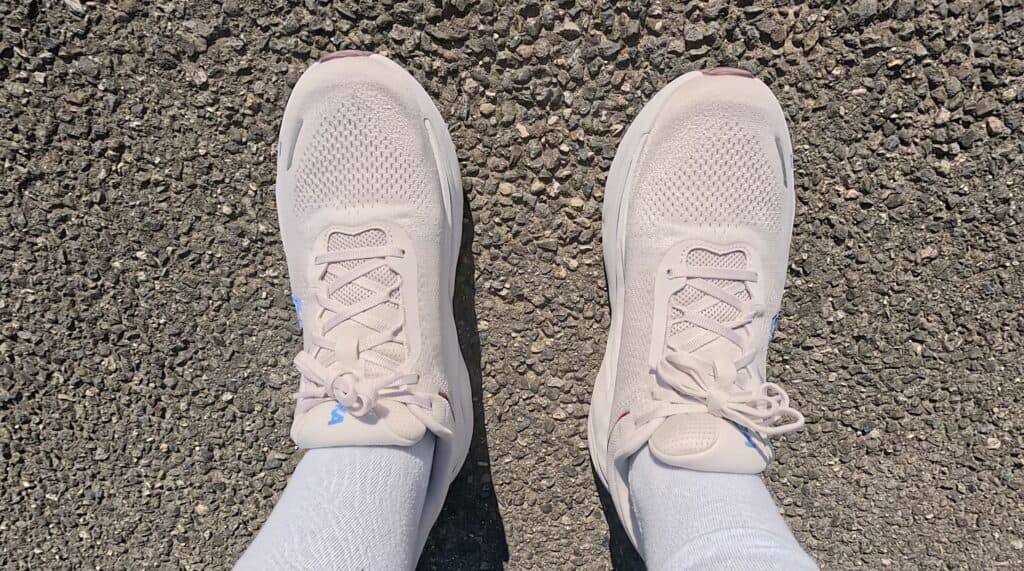
HOKA has replaced the Arahi 8’s jacquard mesh with a thinner technical mesh. The new material feels slightly more breathable, but the more significant change is the shape of the forefoot.
The Arahi 8 tapers quite sharply around the toes. I found it too restrictive to wear comfortably in my usual size.
The Arahi 9 still narrows towards the front, so it isn’t an anatomically shaped or genuinely wide toe-box shoe. However, it is considerably more accommodating than the Arahi 8.
I would now describe the standard-width Arahi 9 as having a relatively normal toe-box fit. That might not sound revolutionary, but it addresses one of the main criticisms I had of the previous model.
Elsewhere, the Arahi 9 provides a secure lockdown. There is an additional eyelet if you need to use a runner’s knot, while the padded heel collar and moderately flexible heel counter hold the rearfoot without feeling excessively rigid.
The lower part of the heel cup also adds some additional structure around the ankle.
If the Arahi 8 feels cramped across your toes, the improved fit alone could justify upgrading to the Arahi 9.
Check the latest prices below:
Is the HOKA Arahi 9 suitable for faster running?
The Arahi series has changed considerably over the past few generations.
The Arahi 6 and Arahi 7 were relatively firm, light and snappy stability shoes. They stood out because there weren’t many supportive shoes that could also cope well with uptempo sessions.
The Arahi 8 moved away from that formula and became a more highly cushioned cruiser. The Arahi 9 continues in the same direction.
At 316 g in my US men’s size 12, it is 9 g heavier than the Arahi 8. That small difference is unlikely to be particularly noticeable on an easy run, but the overall shoe still feels too heavy and controlled for faster workouts.
It performs best as a comfortable shoe for relaxed daily mileage, recovery runs and steady efforts.
If you loved the quicker feel of the Arahi 6, the Arahi 9 is not a return to that style of shoe. It remains a highly cushioned stability shoe designed more for cruising than running quickly.
Is the Arahi 9 good for walking and standing?
The Arahi 9 should work very well for people who spend long periods walking or standing, particularly if they prefer a supportive shoe.
Its broad base, sole flare, structured heel and smooth rocker give it a stable feel as you move forwards.
The cushioning is protective without feeling excessively soft underneath the inner heel. That may be helpful for people who dislike the unstable sensation sometimes associated with softer, highly cushioned shoes.
One point to consider is the gentle outward tilt created by the medial support. Some people will find that reassuring, while others may prefer a shoe that feels more neutral underfoot.
Support features are only useful when they feel comfortable for your individual foot and gait.
Compared with the Arahi 8, the roomier toe box also makes the Arahi 9 the more appealing option for spending many hours on your feet.
Check the latest prices below:
Who should choose the HOKA Arahi 9?
The Arahi 9 is likely to be the better choice if:
- The Arahi 8 feels too narrow or tapered around your toes.
- You want noticeable support beneath the inner heel.
- You prefer a more structured ride with less compression at the rearfoot.
- You need a stable shoe for easy running, walking or prolonged standing.
- A more breathable upper is important to you.
It is less suitable if you want a light and fast stability shoe for intervals or tempo sessions.
It is also unlikely to satisfy runners hoping for a return to the firmer and snappier personality of the Arahi 6 or Arahi 7.
Who should choose the HOKA Arahi 8?
The Arahi 8 remains worth considering if:
- It fits your foot comfortably.
- You prefer a slightly softer sensation beneath the heel.
- You mainly want a highly cushioned stability shoe for easy running.
- You can find it at a significant discount.
There is no need to replace a comfortable Arahi 8 simply because a newer version is available.
The outsole layout, stack height, heel-to-toe drop and general use case remain very similar.
The biggest question is fit. If you have enough room around your toes in the Arahi 8 and don’t need the additional medial support, the older model could offer better value.
HOKA Arahi 9 vs Arahi 8: Which should you buy?
The HOKA Arahi 9 isn’t merely an upper update, although the redesigned fit is its biggest improvement.
It has a more breathable technical mesh, a noticeably less tapered toe box and a slightly more supportive feel beneath the inner heel.
It is also a little heavier and remains firmly in the highly cushioned cruiser category rather than returning to the faster character of the older Arahi models.
Personally, I would choose the Arahi 9 because the improved toe-box shape makes it much more comfortable and wearable for me. I also prefer the more structured sensation around the medial heel.
However, if the Arahi 8 already fits you well, the performance differences aren’t dramatic enough to make upgrading essential. In that situation, buying the Arahi 8 on sale is likely to be the better-value option.
In short, choose the Arahi 9 for the improved fit and additional support. Choose the Arahi 8 if it fits comfortably and is available at a substantial discount.