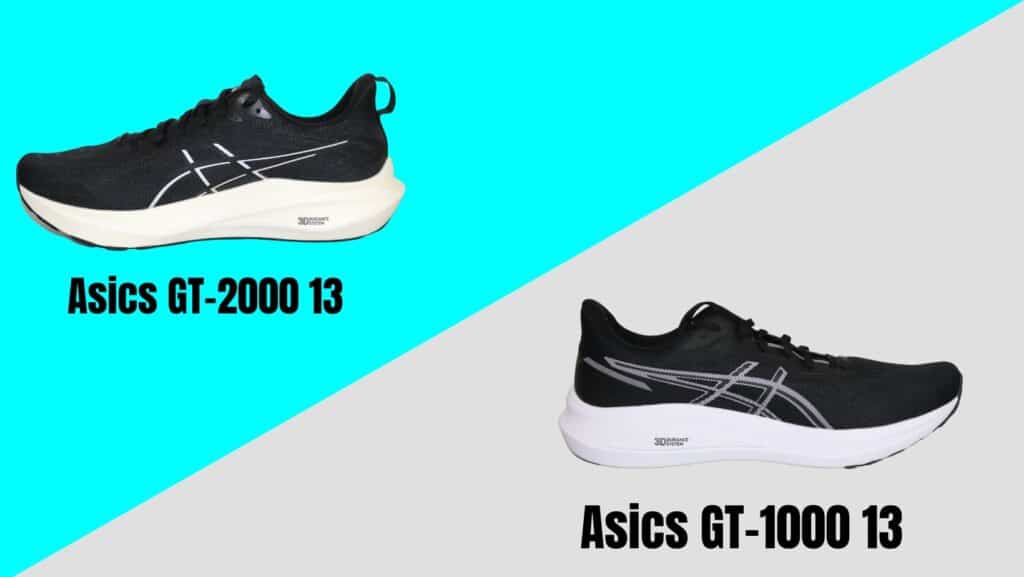
If you’re searching for a stability shoe to help manage overpronation, the Asics GT-1000 v13 and Asics GT-2000 v13 are two popular options. Both shoes are designed to offer support and control for those who need it, but they differ in cushioning, fit, and price. In this comparison, we’ll break down the key differences between these two models, helping you decide which fits you best.
Price and Overview
- Asics GT-1000 v13: The more affordable option, priced around $100-$110. It provides solid stability and support for everyday use.
- Asics GT-2000 v13: A more premium shoe, priced around $150. It offers enhanced comfort, cushioning, and stability features for more intensive use.
Cushioning: FlyteFoam vs FF Blast Plus
One of the biggest differences between the two models lies in the cushioning:
- GT-1000 v13: Features FlyteFoam cushioning, an EVA-based foam that provides a firmer ride. You’ll feel more of the ground beneath your feet, which may appeal to those who prefer a more connected feel when walking or running. The firmness also makes it a bit less bouncy compared to the GT-2000.
- GT-2000 v13: Equipped with FF Blast Plus cushioning, which is softer and offers more energy return. This means you get a slightly snappier, more responsive feel, making it ideal for those who prioritize comfort over long distances. If you’re looking for a plush, cushioned ride, the GT-2000 is the better choice.
Both shoes have a 36mm heel height and a 28mm forefoot height, resulting in an 8mm heel drop. A higher heel drop can help offload the Achilles tendon, benefiting those with Achilles pain or tightness.
Check the latest prices on Amazon below:
Stability Features: 3D Guidance System
Both shoes feature Asics’ 3D Guidance System, designed to help overpronators control foot movement and provide stability.
- Base of Support: Both the GT-1000 and GT-2000 have a wide base and sole flare, where the sole extends beyond the width of the foot to create more stability.
- Sidewalls: The sidewalls on both shoes cradle the foot, keeping it centred during movement. However, the sidewalls on the GT-2000 are more pronounced, offering a bit more support. This is a trade-off, as some users may experience slight pressure points near the heel.
Fit and Upper Design
- GT-1000 v13: This shoe features an engineered mesh upper that’s breathable and provides a comfortable fit. It has a slightly roomier toe box compared to the GT-2000, making it a good option for those with conditions like Morton’s neuroma or bunions.
- GT-2000 v13: The upper is more breathable, and the design tapers faster toward the toe box, giving it a racing shoe feel. This tapered fit might bunch your toes slightly more, which can be an issue for people with wide feet or toe conditions.
Both shoes have different tongue designs:
- GT-2000: Features a thin, gusseted tongue stitched in for a more secure fit.
- GT-1000: Its non-gusseted tongue still provides a good lockdown but lacks the extra security of the GT-2000.
Heel Counter and Padding
- GT-2000: The heel counter on the GT-2000 is padded but offers less stability than the GT-1000. The thinner heel design makes it more flexible, which some users may find comfortable, but those needing extra heel support might not.
- GT-1000: Offers more stability in the heel counter, making it a good option for those who need additional support around the heel, especially during long walks or runs.
Which Shoe Should You Choose?
- Asics GT-1000 v13: If you’re looking for an affordable, reliable stability shoe, the GT-1000 is a great choice. It’s ideal for beginner runners or anyone seeking a day-to-day shoe that provides moderate stability without breaking the bank.
- Asics GT-2000 v13: If you’re after a premium shoe with a softer, more cushioned ride, the GT-2000 is the better option. It’s designed for uptempo runs and longer periods of standing, offering more comfort with its plush cushioning and enhanced stability features.
Check the latest prices on Amazon below:
Conclusion
The ASICS GT-1000 and GT-2000 are both excellent mild to moderate stability shoes, but they’re designed for slightly different needs. If you’re starting out or want a reliable daily stability shoe at a lower price point, the GT-1000 is a sensible choice. If you prefer a more cushioned ride with a premium feel, the GT-2000 is worth the step up.
If you’re considering a higher level of support, it’s also useful to see how the GT-2000 compares with ASICS’ more robust stability options, such as the Gel-Kayano 31, which sits higher in the brand’s stability range.