The ASICS Gel Cumulus has long been one of my most highly recommended running shoes. It’s comfortable, predictable, and easy to live with — especially for beginner runners and those wanting a reliable daily trainer.
With the Gel Cumulus 28, ASICS hasn’t just refreshed the design. This version feels noticeably different underfoot compared to the Cumulus 27, from the midsole right up to the upper.
So the real question is simple:
Is this a genuine upgrade, or should you grab the Cumulus 27 while it’s still discounted?
Let’s break it down.
Upper & Fit: More Flexible and Comfortable
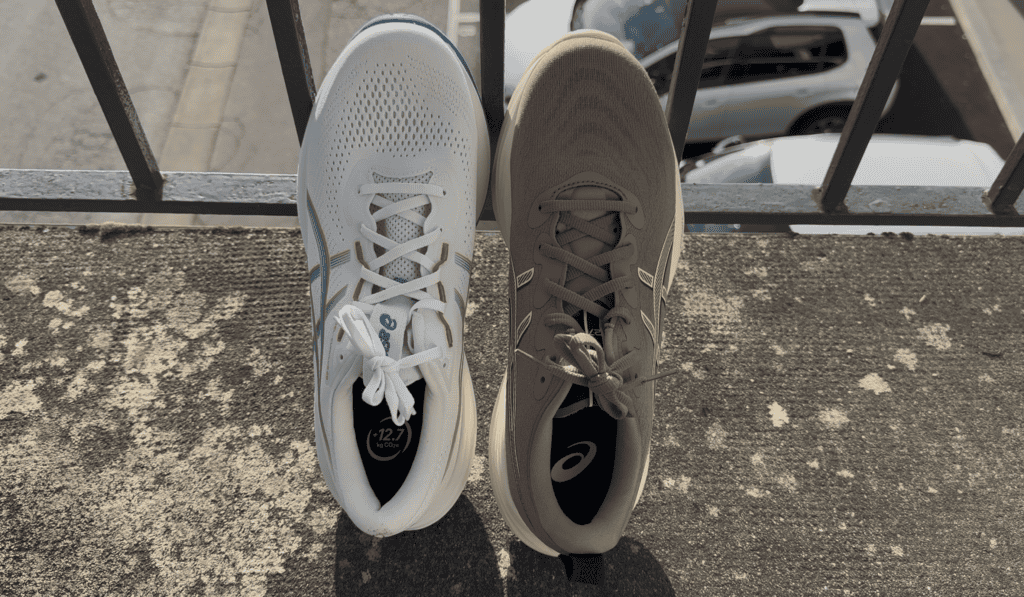
ASICS has fully redesigned the upper in the Cumulus 28, and it’s a clear step forward.
It’s more breathable, softer, and noticeably more flexible than before. Although it’s still officially a standard-width shoe, the added stretch gives your toes more freedom, especially useful for longer walks or runs.
One downside is the removal of the external heel pull tab, which some runners may miss. It’s not a dealbreaker, but it feels like an unnecessary loss on an otherwise refined upper.
Overall, the Cumulus 28 feels more premium on foot than the 27.
Midsole & Cushioning: Where the Real Upgrade Lives
This is where the Cumulus 28 truly separates itself from the previous version.
ASICS has replaced the FFBlast+ midsole with FF BlastMax, the same foam found in shoes like the Novablast 5 and GlideRide Max 2. The result is a ride that’s noticeably:
- Bouncier
- More energetic
- More responsive
Despite this, the stack height and drop remain sensible rather than extreme.
You still get:
- 38.5 mm heel
- 30.5 mm forefoot
- 8 mm drop
But the feel is very different.
The shoe no longer feels flat or muted. Instead, there’s a spring to each step that the Cumulus line hasn’t had for a few years.
Check the latest prices of the shoes on Amazon:
Heel Geometry: Smoother and More Natural Transitions
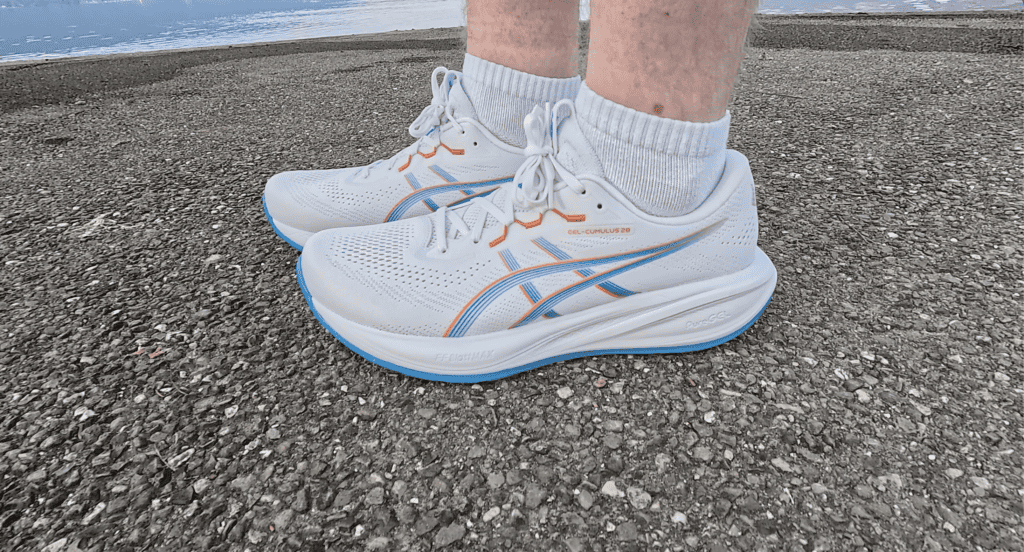
Another major improvement is the redesigned heel bevel.
The Cumulus 28 now transitions much more smoothly when you strike the ground, especially noticeable when walking or running at easy paces. The shoe rolls forward naturally instead of feeling blocky through the rearfoot.
This is one of those changes you don’t notice visually — but you definitely feel it when moving.
Weight: Slightly Lighter, Slightly Nimbler
The weight difference is small, but meaningful in context.
In a men’s US 12:
- Cumulus 27: ~304 g
- Cumulus 28: ~301 g
Combined with the new foam and geometry, the shoe feels lighter and quicker than before, even if the scale barely moves.
Outsole & Durability: Small but Important Changes
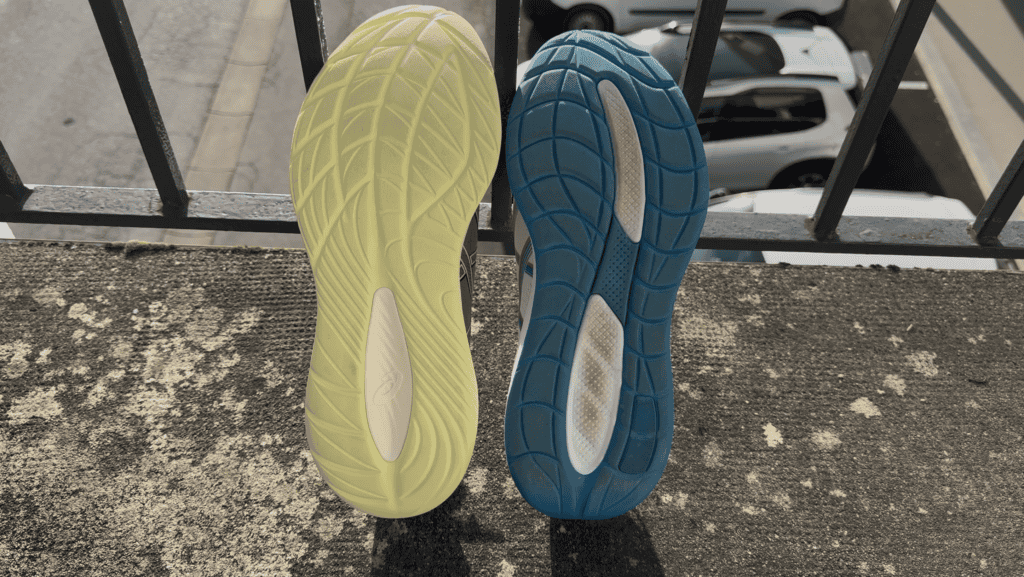
ASICS has also updated the outsole by adding harder rubber pods alongside the FluidRide outsole material.
This should:
- Improve durability
- Increase traction
- Reduce premature wear
This is particularly welcome because some runners had concerns about outsole wear in the Cumulus 27.
The forefoot remains flexible, which helps with smooth toe-off, though it means the shoe isn’t ideal if you specifically need a very stiff forefoot for protection.
Check the latest prices of the shoes on Amazon:
ASICS Gel Cumulus 28 vs 27 – Key Specs
Here’s a clear comparison of the main differences:
| Feature | Cumulus 27 | Cumulus 28 |
|---|---|---|
| Heel Stack | ~38.5 mm | ~38.5 mm |
| Forefoot Stack | ~30.5 mm | ~30.5 mm |
| Drop | 8 mm | 8 mm |
| Weight (US 12) | ~304 g | ~301 g |
| Midsole | FF Blast+ | FF BlastMax |
On paper, they look similar.
On foot, they feel very different.
How the Cumulus 28 Performs for Walking & Daily Use
For walking and lifestyle use, the Cumulus 28 works extremely well.
The smoother heel bevel, comfortable upper, and moderate stack height make it a great all-day shoe if you want something that looks like a running shoe but feels natural when walking.
It can also handle standing for moderate periods, though it’s still a running shoe rather than a work-specific option like the Ghost Max or Bondi.
How It Runs: Still Reliable, Now More Fun
Traditionally, the Cumulus series has been one of the most recommended shoes for beginner runners and daily mileage — and the 28 continues that role.
But now, it adds something extra:
- More energy return
- More snap at toe-off
- Better rhythm when running
It’s not as soft or aggressive as the Novablast 5, but that’s a strength for many runners. The Cumulus 28 feels more stable and controlled while still being lively.
It’s now genuinely suitable for:
- Daily training
- Easy runs
- Entry-level running
- And even some faster sessions
It sits just below the Novablast in speed, but above it in stability and predictability.
Who Should Choose the Cumulus 28?
The ASICS Gel Cumulus 28 is ideal if you want:
- A versatile daily trainer
- A shoe that works for both walking and running
- Moderate cushioning without instability
- A more energetic feel than previous Cumulus models
It’s particularly good for runners who found the Cumulus 27 comfortable but a little dull.
Final Verdict: Is the Cumulus 28 Worth It?
Yes — the Cumulus 28 is a genuine step forward.
It keeps everything people like about the Cumulus line — comfort, reliability, stability — but adds:
- A more modern midsole
- Smoother transitions
- And a more premium feel overall
If you’re choosing between the two and price isn’t the main factor, the Cumulus 28 is the better long-term choice.
If you’d like to check current prices, we’ve included links in the post. And if you’re deciding between other ASICS models, we also compare this to the Nimbus, Novablast, and Kayano in separate guides.