Everyone is talking about the ASICS GEL Nimbus 28 being lighter than the Nimbus 27. And yes — the weight drop is real. But in reality, that’s just one of five major changes ASICS has made, and together they completely change how this shoe feels underfoot.
In this guide, I’ll break down:
- The exact weight change
- The unchanged stack and drop
- The new outsole and forefoot stiffness
- The upper fit changes
- And how all of this affects walking and running performance
So by the end, you’ll know whether the Nimbus 28 is really worth upgrading to, especially at this premium price point.
Weight Difference – A Big Drop You Can Feel
Let’s start with the most talked-about change: the weight.
In a US men’s size 12:
- The Nimbus 27 weighs 350 g
- The Nimbus 28 weighs 316 g
That’s a 34 g reduction per shoe, which is a significant change for a max-cushion trainer. You feel it immediately in hand and also when you’re walking or running in the shoe.
The Nimbus 28 does feel lighter and less bulky through transition. However, as you’ll see below, lighter doesn’t automatically mean more responsive in this case.
Stack Height & Drop – Same Numbers, Different Feel
Despite the weight change, ASICS has kept the platform the same:
- 43.5 mm heel
- 35.5 mm forefoot
- 8 mm heel-to-toe drop
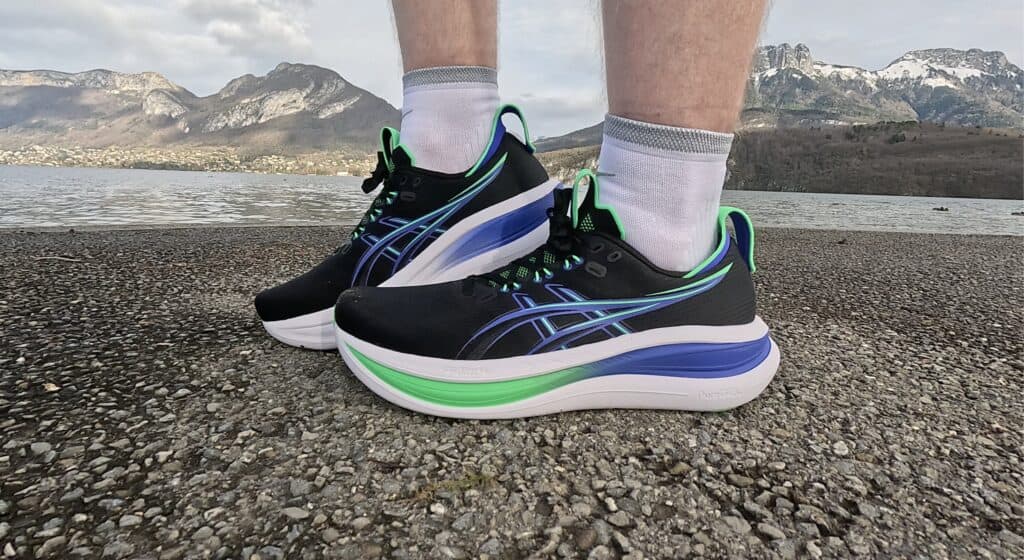
On paper, this suggests the Nimbus 28 should feel very similar to the Nimbus 27. In reality, it feels very different on foot, and that comes down to the outsole construction and forefoot stiffness.
Check the latest prices on Amazon:
Outsole Changes – Thicker Rubber, New Flex Grooves, Much Stiffer
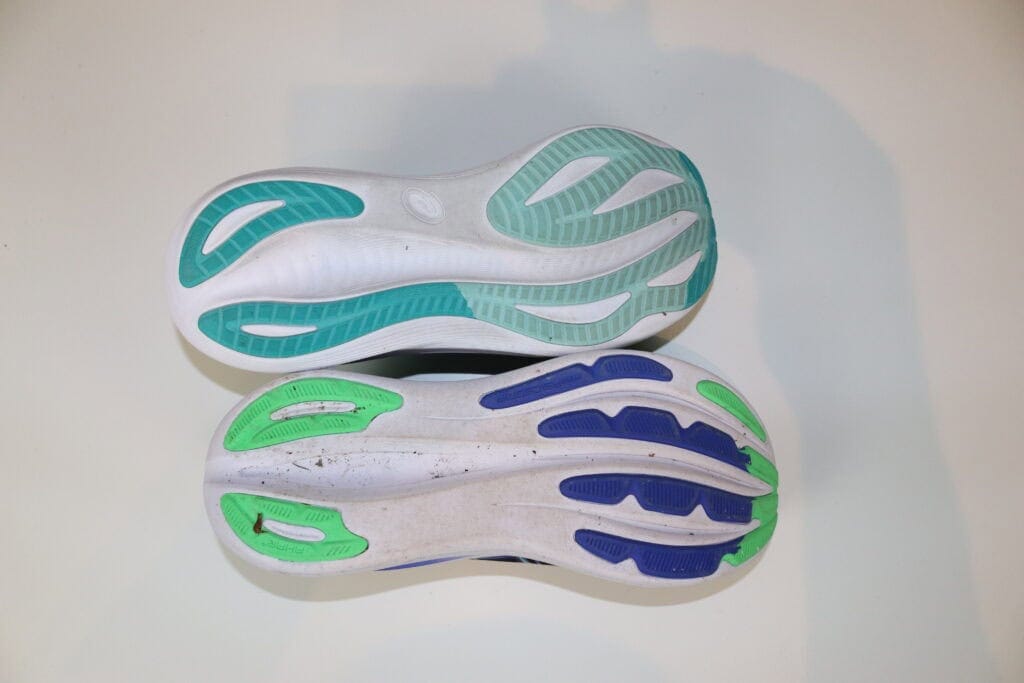
The Nimbus 28 features a completely redesigned outsole with:
- More overall rubber coverage
- A thicker layer of AHAR rubber
- New flex grooves through the forefoot
In the Nimbus 27, the outsole allowed for much more natural flexibility, particularly at toe-off. In contrast, the Nimbus 28 is noticeably stiffer and harder to bend.
This directly affects:
- Heel-to-toe transition
- Push-off feel
- How springy or bouncy the shoe feels
This stiffness is one of the main reasons the Nimbus 28 now feels firmer and more controlled than the Nimbus 27. This could make it an ideal option for those with toe mobility issues like Hallux Rigidus. If you are looking for a more rockered option then the Asics Glideride Max 2 is the ultimate rockered ride.
Upper & Fit – More Breathable, Still Tapered in the Forefoot
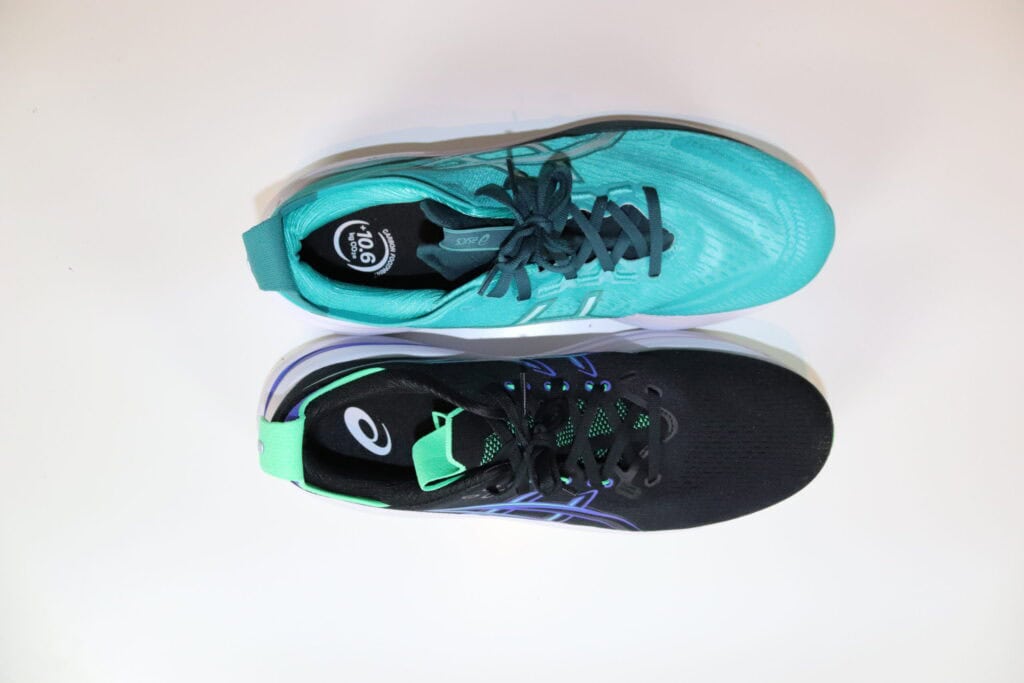
The Nimbus 28 now uses a new engineered mesh upper that is:
- More breathable
- Slightly more structured
- Still very well padded around the heel collar for excellent lockdown
The tongue remains largely unchanged, and the external heel tab is slightly longer, though this is mainly a cosmetic update.
One key fit point remains important. The Nimbus still has a tapered forefoot. With the new mesh wrapping the foot more closely, you may notice:
- Pressure along the outside of the toes, especially if you have a broader foot
The good news is that ASICS still offers the Nimbus 28 in:
- Narrow
- Standard
- Wide
So if you’ve previously needed a wider Nimbus, that option is still available.
Check the latest prices on Amazon:
ASICS Nimbus 28 vs 27 – Quick Comparison Table
| Feature | Nimbus 27 | Nimbus 28 |
|---|---|---|
| Weight (US 12) | 350g | 316g |
| Stack Height (Heel / Forefoot) | 43.5 mm / 35.5 mm | 43.5 mm / 35.5 mm |
| Heel-to-Toe Drop | 8 mm | 8 mm |
| Forefoot Flexibility | More flexible | Much stiffer |
| Outsole | Less rubber coverage | Thicker AHAR rubber + new flex grooves |
| Stability Feel | Neutral, softer | More stable neutral |
| Upper | Softer engineered mesh | New breathable engineered mesh |
| Fit Options | Standard / Wide / Extra Wide | Standard / Wide / Extra Wide |
| Ride Feel | Soft, bouncy, versatile | Firmer, more stable, less springy |
Performance – Walking vs Running
As a Walking / Lifestyle Shoe
As a walking shoe, the Nimbus 28 still performs very well. It offers:
- Excellent underfoot protection
- Plenty of cushioning for long days on your feet
- A very secure heel and midfoot hold
Compared to the Nimbus 27, however, it feels:
- Firmer
- Less bouncy
- More stable and controlled
You lose some of the soft, playful feel that made the Nimbus 27 such a comfortable lifestyle and travel shoe.
As a Running Shoe
One of the standout features of the Nimbus 27 was its versatility. It worked well as:
- A recovery run shoe
- A long-run and marathon shoe
- And even for some uptempo sessions, thanks to its aggressive rocker and softer ride
The Nimbus 28 keeps that aggressive geometry, but because of:
- The stiffer outsole
- The stiffer forefoot
- And the firmer overall platform
It now feels:
- Firmer underfoot
- Slower through transition
- Less springy at toe-off
For me, the Nimbus 28 now suits steady marathon-pace running far more than faster tempo workouts. It simply doesn’t rebound or roll you forward as efficiently as the Nimbus 27 did.
So far, I’ve logged around 30 miles in the Nimbus 28, and there has been minimal softening since the first run. It may loosen slightly after 100 miles, and I’ll update this if that changes.
Final Verdict – Should You Upgrade from the Nimbus 27 to the Nimbus 28?
I was a big fan of the Nimbus 27, and it remains one of the most well-rounded max-cushion shoes ASICS has produced. While the changes to the Nimbus 28 look subtle on paper, they result in a very different ride experience.
The Nimbus 28 is:
- Lighter
- Firmer
- More stable
- Less bouncy
- Less playful at faster paces
Whether that’s a positive change depends entirely on what you liked about the Nimbus 27. If you need a more stable but still as responsive option then it may be worth considering the Asics GT-2000 14.
Stick with the Nimbus 27 if you want:
- Maximum softness
- A springy toe-off
- A more versatile shoe for slower and faster efforts
Choose the Nimbus 28 if you want:
- A lighter feel
- More underfoot stability
- A steadier, more controlled long-run platform