At Flawless Shoe Reviews, we’re comparing two standout shoes in the ASICS lineup: the GT-2000 14 and the Novablast 5. While they both feature ASICS’ FF BlastMax foam, they’re designed for very different purposes. Whether you’re standing all day, walking, or running, this guide will help you decide which shoe is right for your needs.
Midsole & Cushioning: Same Foam, Different Purpose
Both the GT-2000 14 and Novablast 5 feature FF BlastMax, ASICS’ latest high-rebound foam. However, how that foam is implemented – and what surrounds it – changes everything.
- In the GT-2000 14, the foam feels firmer. That’s largely due to built-in stability elements like a 3D Guidance System, denser foam on the medial side, and a stiff heel counter that helps control overpronation.
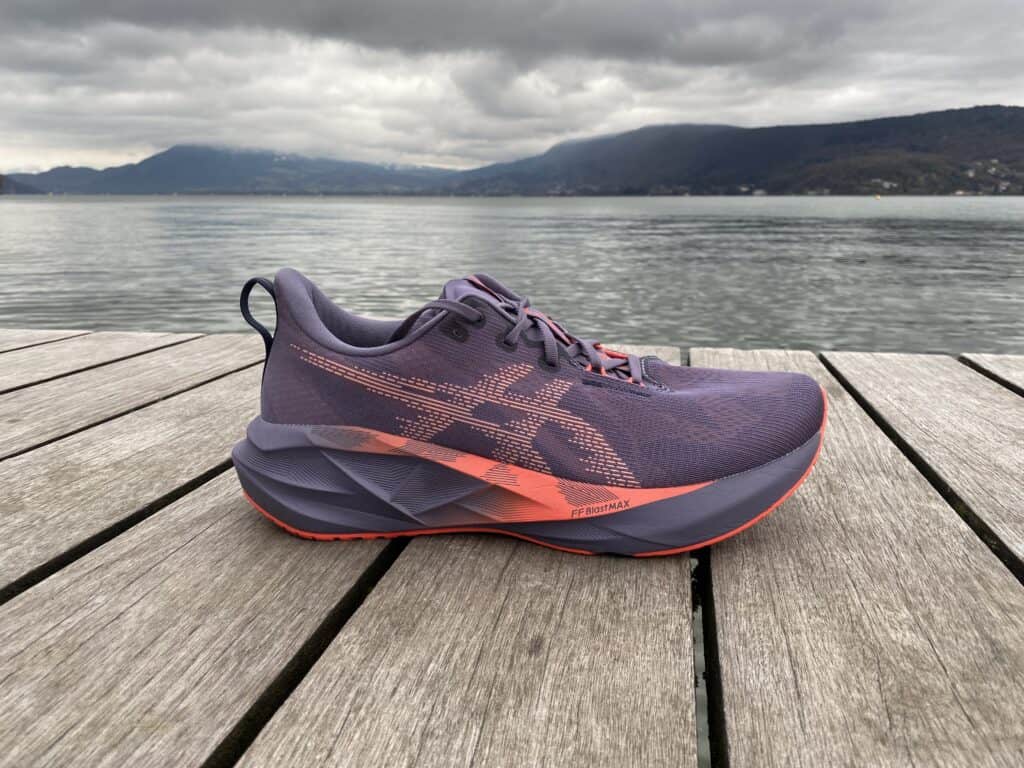
- In contrast, the Novablast 5 offers a trampoline-like bounce with an aggressive forefoot rocker and greater stack height:
- 41.5mm heel / 33.5mm forefoot (8mm drop)
- Versus GT-2000’s 36.5mm heel / 28.5mm forefoot (also 8mm drop)
With the Novablast, you’ll sink into the foam and feel it push you back out. The GT-2000 is noticeably more controlled and grounded, especially under the medial arch.
Stability Features: GT-2000’s Strength
The GT-2000 14 is one of ASICS’ best moderate stability running shoes, offering features that help guide your foot without overwhelming it:
- Sidewalls positioned higher along the medial midfoot
- Broader base in the heel, midfoot, and forefoot
- Denser foam under the arch for mild pronation control
- Stiff heel counter to help prevent excessive motion
While the Novablast 5 includes some sidewalls and a broader base than earlier versions, it lacks structured support – making it more of a stable neutral shoe.
If you’re familiar with the New Balance 860, you’ll notice the GT-2000 is slightly less aggressive in its pronation control, without forcing the ankle outward like the 860 sometimes can.
Check the latest prices on Amazon below:

Upper Fit & Comfort
The two shoes offer distinct upper designs:
- GT-2000 14: Woven upper that feels secure but breathable, with more width in the toe box thanks to its broader platform.
- Novablast 5: Engineered mesh with a closer, race-inspired fit. It also features a pull tab at the heel for easy entry – something missing from the GT-2000.
Both shoes fit true to size and come in wide versions (though availability can vary by region).
Weight Comparison
- Novablast 5: Approx. 255g (Men’s US 9)
- GT-2000 14: Approx. 273g (Men’s US 9)
That extra weight in the GT-2000 comes from the added support structures. It also helps the shoe feel more stable for daily wear.
Use Cases: Walking, Standing, Running
Day-to-Day & Walking Use
If you’re after an everyday shoe for walking or standing, the GT-2000 14 offers more structured support and a more controlled feel underfoot.
The Novablast 5, with its rocker and high cushioning, can feel unstable during slower movement or long periods on your feet — particularly compared to more walking-focused options in ASICS’ range.
Running Performance
- GT-2000 14: Perfect for easy runs, long distances, and mild uptempo workouts. Offers a stable, responsive ride without feeling overly firm.
- Novablast 5: A true do-it-all neutral trainer. Ideal for faster paces, marathon pace work, and light racing – similar to the versatility seen in the Hoka Clifton 9, but with more bounce and speed.
Check the latest prices on Amazon below:
Final Thoughts: Which One Should You Choose?
| Feature | ASICS GT-2000 14 | ASICS Novablast 5 |
|---|---|---|
| Stability Level | Moderate Stability | Neutral |
| Midsole Feel | Firmer, responsive | Soft, trampoline-like |
| Best for Walking? | Yes | Sometimes (less stable) |
| Best for Running? | Easy to Long Runs | All paces (esp. uptempo) |
| Weight | 273g | 255g |
Choose the GT-2000 14 if you want dependable support, especially if you overpronate or want a shoe that transitions seamlessly from walking to running.
Go for the Novablast 5 if you’re after a highly cushioned, fun ride that can handle everything from daily mileage to speedwork.