
At first glance, the Brooks Glycerin 23 and the Brooks Glycerin 22 look very similar. Same category, similar stack heights, and the same DNA Tuned nitrogen-infused midsole on paper.
But once you get them on your feet, the differences become much clearer.
There are five key changes between the Glycerin 23 and 22 that are relatively subtle on their own—but together, they noticeably change how the shoe feels, runs, and performs day to day. The big question is whether those changes make it worth upgrading, or whether you’re better off picking up the Glycerin 22 while it’s still discounted.
Let’s break it down.
Midsole Changes: Same Name, Different Feel
Both shoes use Brooks’ DNA Tuned midsole, but the blend has clearly been adjusted in the Glycerin 23.
Underfoot, the 23 feels bouncier and more springy than the 22. While Brooks hasn’t officially detailed what’s changed in the foam formulation, the difference is obvious when running. The larger cells still do a great job of absorbing vibration, while the denser areas feel more active during toe-off.
Stack Height & Drop
- Glycerin 23: 38 mm heel / 30 mm forefoot → 8 mm drop
- Glycerin 22: 38 mm heel / 28 mm forefoot → 10 mm drop
That means Brooks has:
- Reduced the drop by 2 mm
- Added 2 mm of cushioning under the forefoot
This mirrors what we’re seeing across the Brooks range, with models like the Adrenaline GTS 25 also moving to a slightly lower drop.
You can feel this change most during longer runs, where pressure feels more evenly distributed across the foot.
Check the latest prices on Amazon:

Stability & Platform Changes
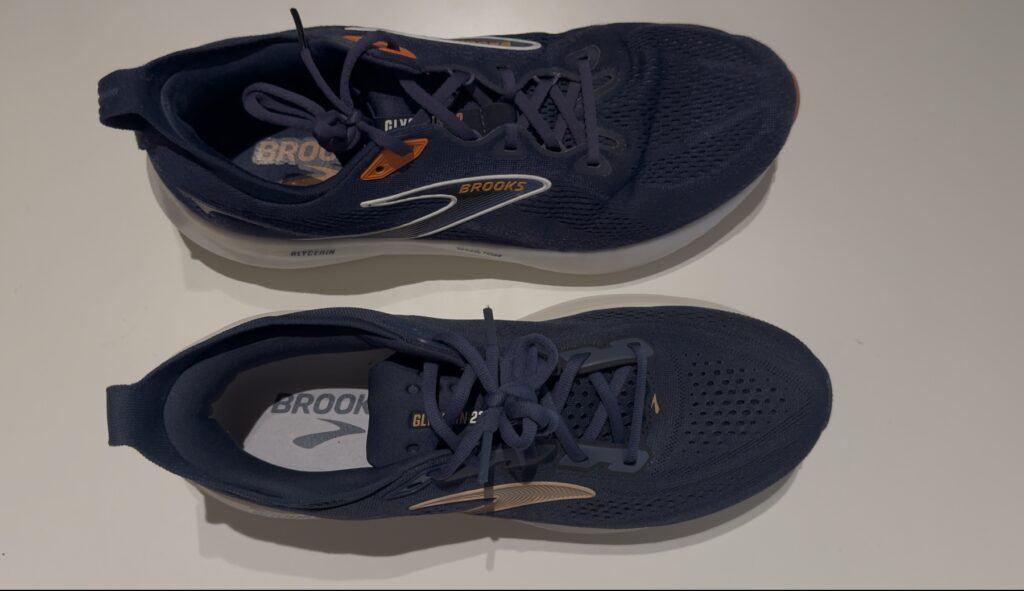
One noticeable update is the removal of the lateral midfoot sidewall that featured on the Glycerin 22. The Glycerin 23 looks cleaner and more streamlined as a result, but it also feels a touch less guided through the midfoot.
Underneath, Brooks has updated the outsole rubber layout. If durability matches what we’ve seen in the Glycerin Max series, this should be a very long-lasting shoe—ideal for high mileage runners.
Weight: The Biggest Trade-Off
This is where the Glycerin 23 takes a hit.
In a men’s US size 12:
- Glycerin 23: ~370 g
- Glycerin 22: ~339 g
That’s a significant increase, and on paper it looks like a step backwards.
Interestingly, though, the lighter-feeling midsole partly offsets the added weight. The 23 doesn’t feel as dull or sluggish as you’d expect—but there’s no getting around the fact that it’s still a heavy shoe.
| Specifications | Glycerin 23 | Glycerin 22 |
|---|---|---|
| Stack Height (Heel / Forefoot) | 38 mm / 30 mm | 38 mm / 28 mm |
| Heel Drop | 8 mm | 10 mm |
| Weight (Men’s US 12) | ~370 g | ~339 g |
Upper & Fit Updates
The Glycerin 23 gets a new engineered mesh upper, giving it a more modern, sleeker look. Comfort levels remain high, with:
- A padded tongue
- Plush heel collar
- External heel pull tab
The fit will feel very familiar if you’ve worn previous Glycerin models, with good lockdown through the midfoot and a comfortable, accommodating toe box.
Walking & Everyday Comfort
For walking and daily wear, the move to an 8 mm drop changes the feel slightly.
If you liked the Glycerin 22 specifically because the higher drop helped offload your Achilles, this may take a bit of adjustment. Most people won’t notice the change much, but if you’re sensitive to drop differences, it’s worth easing into.
The forefoot remains very flexible, which is comfortable for most people but not ideal if you’re particularly sensitive around the ball of the foot.
Check the latest prices on Amazon:
Running Performance: Better Feel, Same Role
On the run, the Glycerin 23 is:
- Bouncier
- Smoother through transitions
- More enjoyable at easy paces than the 22
Brooks has also refined the heel bevel, which makes heel-to-midfoot transitions feel quicker and less clunky than the previous model.
That said, the added weight still limits what the shoe can do. This remains a workhorse daily trainer, best suited to:
- Easy runs
- Long miles
- Recovery days
Uptempo sessions and faster workouts are still not its strength—especially compared to competitors that have managed to reduce weight in their latest models like the Asics Gel-Nimbus 28.
Final Verdict: Should You Upgrade?
The Brooks Glycerin 23 is more comfortable, bouncier, and smoother than the Glycerin 22, with a nicer upper and improved ride feel.
However, the increase in weight is a real downside, and it stops the shoe from becoming more versatile than its predecessor. You can see how it compares to the 2026 Brooks lineup in our overview.
Choose the Glycerin 23 if:
- You want a softer, springier feel underfoot
- You prefer a slightly lower drop
- Comfort is your top priority
Consider the Glycerin 22 if:
- You prefer a lighter shoe
- You like a higher drop for Achilles relief
- You can find it at a good discount
Both are excellent neutral trainers—but they suit slightly different preferences.
If you’ve run in either model, let me know what you think. Is the added bounce worth the extra weight, or would you rather Brooks had gone in the opposite direction?


