The New Balance 1080 line has undergone a huge transformation over the past few years. The v13 was famously soft and plush — almost mushy — which some runners loved and others found too unstable. With the 1080 v14, New Balance stiffened up the platform and created a shoe that felt more controlled and reliable for both running and everyday wear.
Now, with the 1080 v15, this isn’t a subtle update — it’s a complete redesign from the ground up. The most notable change is the introduction of brand-new Infinion cushioning, which replaces the familiar Fresh Foam X used in the v14. On foot, whether you’re walking or running, the two shoes feel very different. The v15 also increases overall stack and sheds weight, which noticeably changes the overall ride before you even think about geometry or fit.
What’s Different in the Ride and Feel
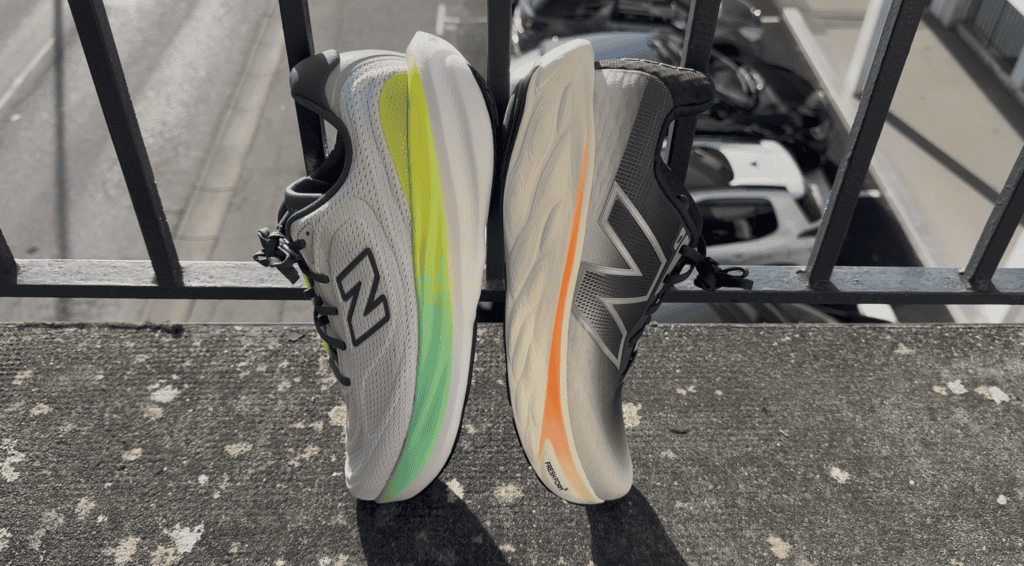
One of the biggest shifts in the v15 is in the way it transitions from heel to forefoot. The aggressive forefoot rocker and higher toe spring we saw in the v14 are gone, replaced with a flatter, more grounded feel that gives you more contact with the road. The forefoot itself is more flexible now, which is relatively rare in max-stack daily trainers. Where the v14 felt stiff and protective, the v15 bends more easily with your stride.
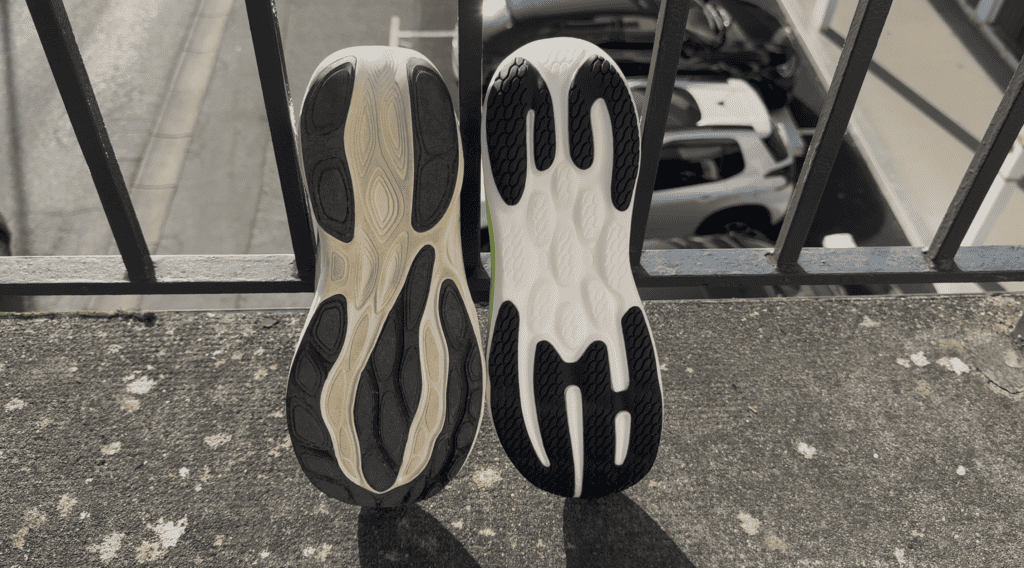
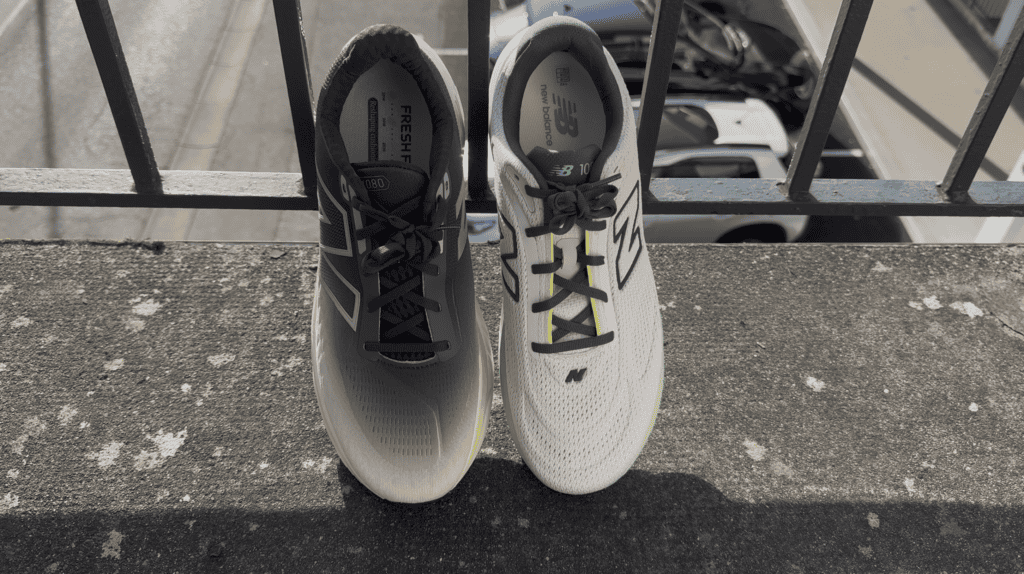
Underneath, the outsole rubber coverage is reduced compared to the v14. While this helps keep weight down, we’ll need more time to see how it holds up for long-term durability. The new engineered mesh upper wraps the foot in a way that feels somewhat like a knit, with a more tapered fit in the forefoot and a slightly narrower platform overall.
From a stability standpoint, the v15 sits differently too. The narrower forefoot base and reduced sole flare mean less inherent stability than the broader platform of the v14. The heel counter is a bit more flexible, and the sidewalls around the heel are smaller, giving the v15 a lighter, less planted feel.
Check the latest prices on Amazon below:
Everyday Wear vs Running
For walking, lifestyle use, and standing all day, the 1080 v15 feels lighter, bouncier, and a bit more fun underfoot, but it doesn’t offer the broad, supportive platform of the v14. If you prioritise stability or like a more planted feel for longer walks or all-day wear, the v14 might still suit you better.
When it comes to running, the differences become even more pronounced. The v15’s Infinion cushioning gives a springier, more responsive sensation compared to the softer, deeper feel of the v14. It no longer feels like you sink into the foam; instead, there’s more forward propulsion, especially as your stride moves onto the forefoot.
However, the v15’s neutral nature means it provides fewer stability features than before. In contrast, the v14 still had a touch of a stable neutral feel that some runners leaned on for easy and recovery runs.
For runners who enjoy other premium neutral shoes, the ASICS Gel-Nimbus 28 often comes up as a comparably plush but stiffer daily trainer, while the lightweight feel and premium cushioning of the Hoka Clifton 10 make it another excellent alternative. The Brooks Glycerin 23 also sits in this conversation as a soft, comfortable neutral shoe that blends cushion and smooth transitions.
Check the latest prices on Amazon below:
Best Use Cases and Who It’s For
So what type of runs are these shoes best for?
- 1080 v14: Excellent as an easy and recovery run shoe thanks to its stability, broader base, and protective feel.
- 1080 v15: Still suitable for easy and recovery miles, with a lighter feel and added spring. Thanks to the reduced weight and bouncy cushioning, it can also handle early-stage uptempo workouts and longer marathon-pace efforts better than the previous generation.
In that sense, the 1080 v15 now sits uniquely in the market as one of the lightest max-stack premium neutral shoes available.
New Balance 1080 v15 vs v14 – Key Specs
| Model | Stack height (heel / forefoot) | Drop | Weight (US 12) | Cushioning |
|---|---|---|---|---|
| New Balance 1080 v14 | 38 mm / 32 mm | 6 mm | 332 g | Fresh Foam X |
| New Balance 1080 v15 | 40 mm / 34 mm | 6 mm | 295 g | Infinion cushioning |
Check the latest prices on Amazon below:
Final Thoughts
Overall, I think New Balance has done a great job with the v15. It could be a bit wider in the forefoot to make it more accommodating for a greater range of runners, but the overall cushioning and responsiveness are a clear step forward for many.
If you value a broad, stable platform and a traditional feel for everyday use and easy runs, the 1080 v14 remains a strong choice. If you prefer something lighter, bouncier, and more responsive — and you don’t mind a slightly narrower fit — the 1080 v15 represents a bold and exciting update.
Let me know your thoughts: are you sticking with the reliable feel of the v14, tempted by the new cushioning and fit of the v15 or favouring a different shoe in the New Balance range?