If you’re choosing between the New Balance 1080 v15 and the ASICS Gel-Nimbus 28, you’re basically deciding between two of the most popular premium, max-cushion neutral shoes right now from New Balance and ASICS.
On paper, they sit in the same category.
In real life, under your feet, they honestly feel completely different.
And that difference shows up whether you’re mainly walking, using them as an everyday lifestyle shoe, or doing most of your running in them.
What surprised me most when I tested both is this: even though the 1080 v15 has a completely new midsole, it feels noticeably bouncier and more spring-loaded. The Nimbus 28, on the other hand, uses what looks like a familiar cushioning setup, but actually feels much firmer and more controlled underfoot.
So even though both are “max cushion”, the way they deliver comfort is very different.
Heel protection and drop – you feel this straight away
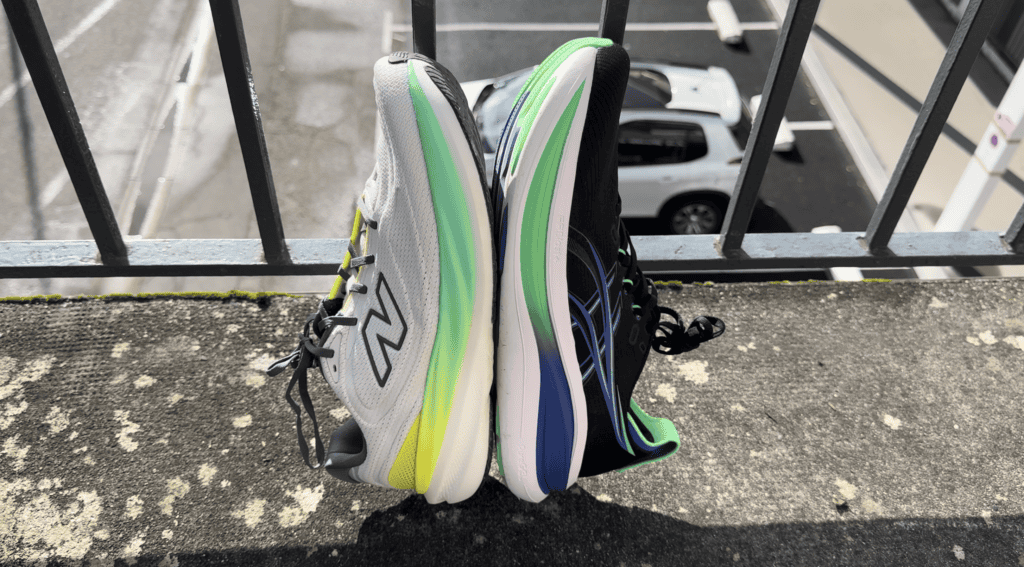
The Nimbus 28 is clearly built around rearfoot protection. There is a lot of material under the heel and an 8 mm drop, which immediately gives you that soft-landing, protected feeling when you first step into the shoe.
If you spend a lot of time walking on concrete, standing for long periods, or you’re a heavier heel striker when you run, that extra heel depth makes a real difference. It simply feels reassuring and supportive at the back of the shoe.
The 1080 v15 is slightly lower and flatter. The drop is reduced and the overall platform feels more even from heel to forefoot. In practice, this tends to spread pressure a little more evenly through the foot, particularly when you’re standing around rather than continuously moving. It doesn’t feel as “stacked” under the heel as the Nimbus, but it feels more balanced.
The weight difference matters more than you might expect
Both models changed quite a bit compared to their previous versions, but the 1080 v15 is clearly the lighter shoe on foot.
That lighter feel is especially noticeable if you’re using the shoe for mixed use – walking, travel, daily errands and some running. The Nimbus feels more substantial and planted. The 1080 feels quicker and easier to move in.
Check the latest prices on Amazon below:
Cushioning feel – this is where the personalities really split
The 1080 v15 no longer feels like the old, very soft and pillow-like New Balance models. The new midsole is noticeably more energetic. There’s a spring to it when you push off, and you get a more responsive, lively sensation both when walking and running.
It feels like a shoe that encourages you to move a bit faster.
The Nimbus 28 feels almost the opposite. Despite having more total cushioning underfoot, the foam is firmer and more rigid. The ride is calmer and more controlled. You don’t get the same bounce back when you push off, but you do get a very predictable, stable platform.
This is one of the biggest reasons people often try both and immediately prefer one over the other.
How the shoes move you forward
Another big part of the feel comes from the shape of the midsole.
The Nimbus 28 uses a much more aggressive rocker. Once your heel contacts the ground, the shoe naturally rolls you forward into the forefoot. That roll is reinforced by a very stiff forefoot, so the shoe does a lot of the work for you during push-off.
This works very well if you like a smooth, guided transition and you want less bending through the front of the shoe.
The 1080 v15 is much flatter through the forefoot and far more flexible. It bends easily and allows your foot to move more naturally through toe-off. You spend a little longer in the forefoot phase and the shoe feels more relaxed and playful, rather than guiding you forward aggressively.
Stability – the Nimbus is clearly more supportive
From a walking and long-day comfort point of view, this is an important difference.
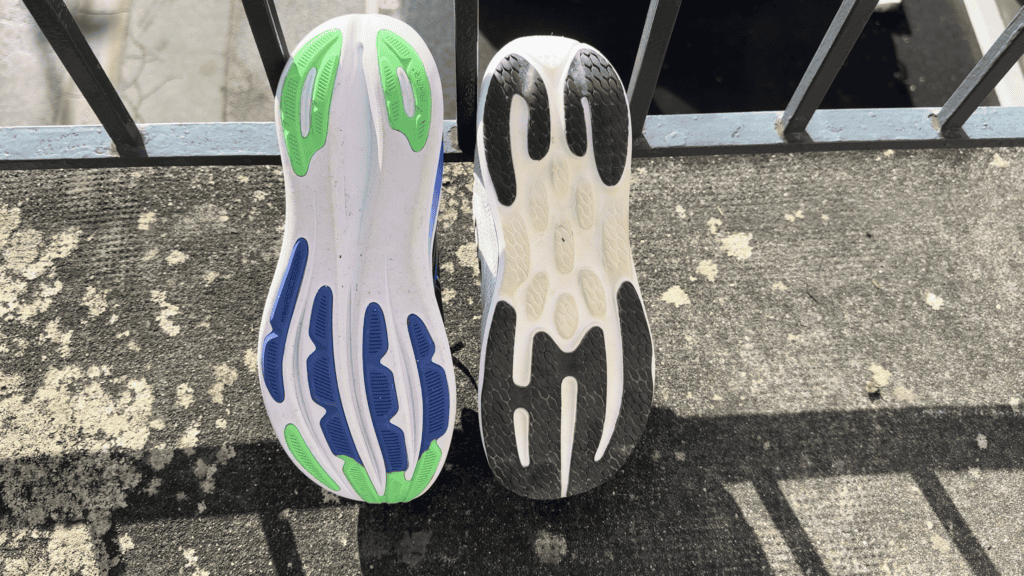
The 1080 v15 is now very much a pure neutral shoe. Compared to the previous version, the platform under the forefoot is narrower, there is less sidewall structure, and there is less flare where the sole extends wider than your foot. That all helps make the shoe lighter and more flexible, but it also reduces inherent stability.
The Nimbus 28 sits on a broader base and uses larger sidewalls around the heel, combined with a much more rigid heel counter. This creates a noticeably more stable and secure feel, particularly when you’re tired or spending hours on your feet.
Clinically and practically, this is what I would describe as a stable neutral shoe, whereas the 1080 remains a classic neutral trainer.
Check the latest prices on Amazon below:
Heel comfort and sensitivity
There is also a clear difference around the back of the shoe.
The Nimbus 28 has more padding and a firmer, more structured heel. This improves security and helps control movement at the rearfoot, but it can feel quite substantial around the ankle.
The 1080 v15 is softer and more forgiving in this area. The heel structure is more flexible, which can be more comfortable if you’re sensitive around the back of the heel or often struggle with rubbing and pressure in that region.
Fit and upper – plush versus lightweight
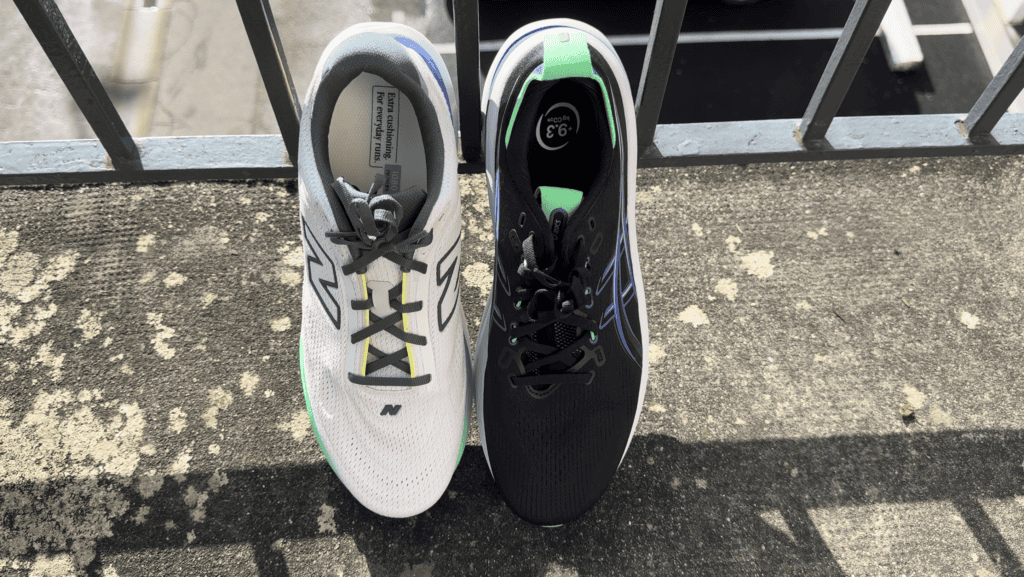
The Nimbus 28 feels more traditional and more luxurious on foot. The toe box shape is fairly conventional, the tongue is thin, and there is plenty of padding around the heel and collar. It feels built for comfort over long periods rather than speed.
The 1080 v15 feels more performance-orientated. The toe box tapers earlier than you might expect from this model line, the tongue is thicker, and there is less overall padding around the heel. If you have a broader forefoot, the wide version of the 1080 is definitely worth considering.
Check the latest prices on Amazon below:
Which one works better for walking and everyday use?
For most people who are mainly buying a shoe for walking, standing all day, commuting and general lifestyle use, the Nimbus 28 is simply the easier recommendation.
It gives you more heel protection, a firmer and more stable base, and a rocker that helps you roll through each step with less effort.
The 1080 v15 is still very comfortable for walking, but it is less stable and much more flexible. It suits people who prefer a lighter, softer-feeling shoe and don’t need as much inherent support from the platform.
And for running?
Both shoes work well as daily trainers, but they shine in slightly different situations.
The Nimbus 28 is excellent for easy and recovery runs. It feels protective, stable and very consistent underfoot, especially when your legs are tired.
The 1080 v15 is where you really notice the upgrade. The new midsole finally gives the 1080 enough pop to handle steady and faster sessions comfortably. Marathon-pace runs, half-marathon pace work and general uptempo training feel much more natural in this version than in previous models.
Quick comparison table (placed here for reference)
| Shoe | Heel stack | Forefoot stack | Drop | Weight (US men’s 12) | Cushioning feel |
|---|---|---|---|---|---|
| ASICS Gel-Nimbus 28 | 43.5 mm | 35.5 mm | 8 mm | 316 g | Firmer, more stable, more controlled |
| New Balance 1080 v15 | 40 mm | 34 mm | 6 mm | 295 g | Bouncier, springier, more responsive |
My simple, honest takeaway
If you want a shoe that feels stable, firm, protective and confidence-inspiring for long days on your feet and relaxed running, the Nimbus 28 is the better choice.
If you want something lighter, more flexible and noticeably more fun to walk and run in, the 1080 v15 is the more exciting option.
They are both excellent max-cushion shoes. They just deliver comfort in completely different ways.