This is the Hoka Clifton Pro, and my first thought when I saw it launching alongside the Clifton 11 was: why does Hoka need another shoe in this range?
They already have the Clifton 11, which is a popular everyday road running shoe and lifestyle option. They also use PEBA-based midsoles in shoes such as the Cielo and Skyward. So, where exactly does the Clifton Pro fit?
The Clifton Pro has a brand-new ProGlide+ midsole, a new upper and a noticeably different feel underfoot. However, its weight and stack height are relatively similar to the Clifton 11.
I took it out for a first run along Lake Annecy to look at the cushioning, stability, fit and overall performance. I also wanted to find out whether it works best as a daily running shoe, a faster workout shoe or even a lifestyle option.
First Impressions on the Run
The first thing I noticed was the stability.
Around two kilometres into my first run, I could feel that the cushioning on the outside of the heel was considerably softer than it was on the inside. It seems as though Hoka is trying to create some additional medial stability, but it had the opposite effect for me.
When I landed on the outside of my heel, the cushioning compressed too much. This caused me to sink into the shoe before moving quite aggressively into pronation.
Those with additional stability needs may struggle with this, particularly if you are a heel striker.
I didn’t have the same problem when landing farther forward on my midfoot or forefoot. However, when I contacted the ground with the outer heel, the shoe felt noticeably less stable than I would like.
ProGlide+ Cushioning
The ProGlide+ cushioning is probably the most interesting part of the Clifton Pro.
It has what I would describe as a resilient feel. When you apply pressure to the foam, it returns to its original shape very quickly.
When walking, this quick rebound made the shoe feel slightly unstable. For that reason, the Clifton Pro would not be my first choice as a walking shoe.
When running, however, that responsiveness works much better. The cushioning feels energetic and bouncy, and it provides plenty of protection underneath the foot.
The only issue comes during that initial heel-strike phase. Once you move beyond the heel and transition through the shoe, the ride becomes much smoother.
Check the latest prices below:
Rocker and Forefoot Flexibility
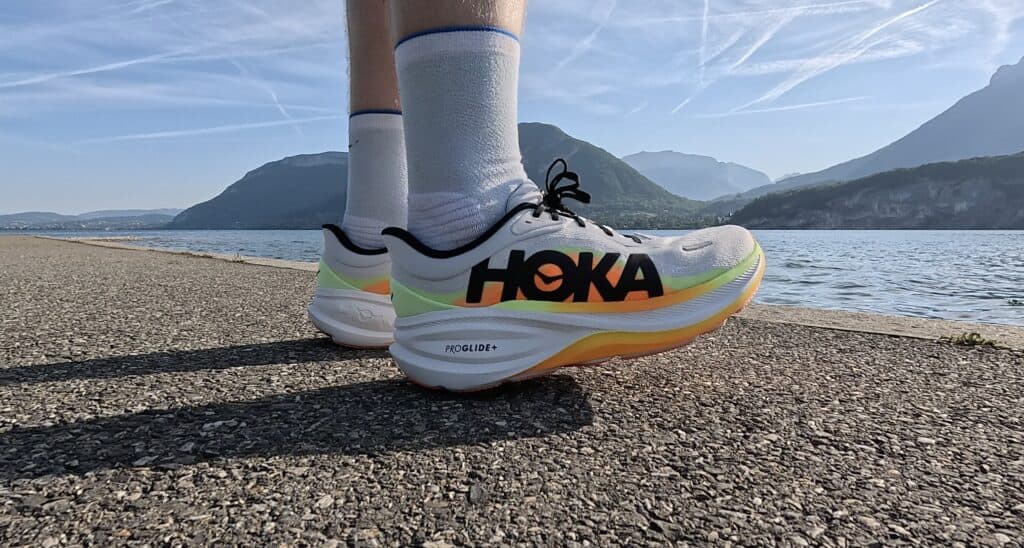
The Clifton Pro has a fairly aggressive forefoot rocker, which creates a smooth transition from the midfoot toward the toes.
There is also plenty of flexibility through the forefoot, allowing the big toe joint to bend naturally as you move forward.
That can feel good if you have no pain or mobility restrictions around the big toe. However, if you have sensitivity around the joint, hallux rigidus or another forefoot problem, the amount of bending may not be ideal.
That isn’t necessarily a criticism of the shoe, as it is designed to feel faster and more flexible than the standard Clifton.
Hoka Clifton Pro Fit
The fit is quite different from what I normally expect from Hoka.
The Clifton 11 surprised me because its toe box was slightly wider than previous versions. The Clifton Pro also has a fairly normal amount of width through the forefoot, rather than the narrow and tapered fit found in some older Clifton models.
I have a normal-width foot and had enough space around my toes without needing to move into a wide version.
That wasn’t the case for me in the Clifton 9 or Clifton 10. I needed the wide version of those shoes, and even then, the toe box still felt slightly tapered.
The unusual part of the Clifton Pro fit is the length. It came up approximately half a size too long for me, which is the first time I’ve experienced that in a Hoka shoe.
Despite the additional length, I didn’t experience any rubbing, friction or heel slippage.
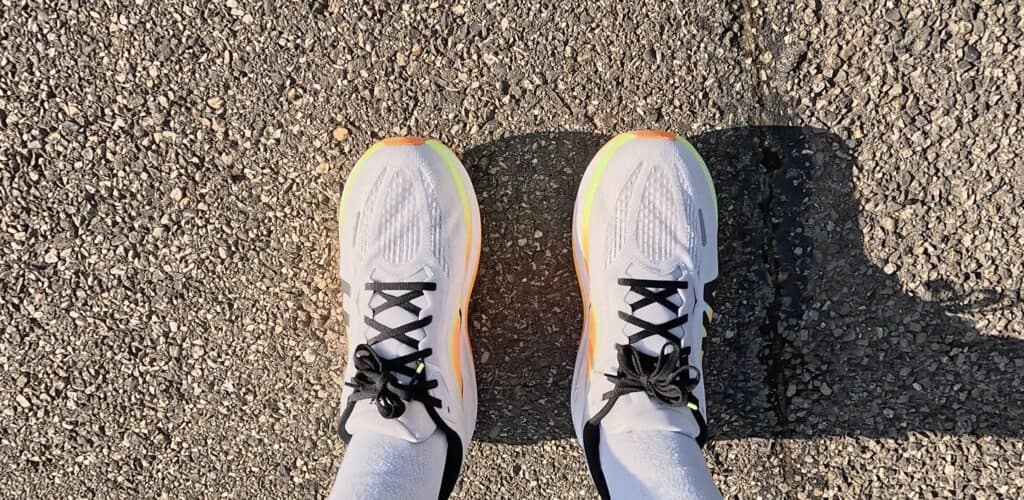
The engineered mesh upper is extremely breathable. It was already around 25°C during my run, and I had no problems with overheating.
You also get a nicely padded tongue, plenty of cushioning around the heel and a relatively rigid heel counter. This held my foot securely without creating any obvious pressure points.
Check the latest prices below:
Is It a Racing Shoe?
The Clifton Pro weighs almost exactly the same as the Clifton 11.
For a shoe positioned as a faster and more performance-focused option, I think it is slightly too heavy to be considered a true racing shoe.
You could certainly use it for strides, tempo sessions or faster everyday runs. The energetic cushioning and aggressive rocker work well when you increase the pace.
However, the weight limits how fast and efficient it feels compared with lighter performance shoes.
What I Like About the Clifton Pro
My favourite feature is the cushioning.
The ProGlide+ foam feels energetic, responsive and well padded. Once you move through the initial heel contact, it provides a smooth and enjoyable transition through the front of the shoe.
The second thing I like is the upper and overall forefoot fit.
The engineered mesh is breathable, and the toe box doesn’t squeeze the toes excessively. For anyone who found the Clifton 9 or Clifton 10 too narrow, the Clifton Pro may feel more accommodating.
What I Don’t Like
The first downside is the weight.
It weighs almost exactly the same as the Clifton 11, despite being a more running-focused shoe. For faster sessions or racing, I would have liked it to be noticeably lighter.
The second issue is versatility.
The Clifton 11 is only slightly cheaper, but it works better across walking, everyday wear and running. The Clifton Pro feels more energetic when running, but I wouldn’t choose it for long periods of walking because of the unstable feeling under the heel.
Finally, the rearfoot stability is a problem for me.
I generally prefer a stable neutral shoe. In the Clifton Pro, the outer section of the heel compressed too much during initial contact, causing my foot to move inward more aggressively than I would like.
Check the latest prices below:
Hoka Clifton Pro Verdict
The Hoka Clifton Pro is an energetic and well-cushioned running shoe with a breathable upper, a more accommodating toe box and a smooth forefoot transition.
However, I’m still not completely convinced about where it fits within Hoka’s range.
It is too heavy to be a true racing shoe, less versatile than the Clifton 11 and not stable enough under the heel for my personal preference.
It will suit neutral runners who want plenty of cushioning for steady runs, strides and occasional faster sessions. It may work particularly well for midfoot and forefoot strikers who won’t compress the softer outer heel as much.
However, heel strikers, walkers and anyone who prefers a stable neutral platform may be better suited to the Clifton 11.